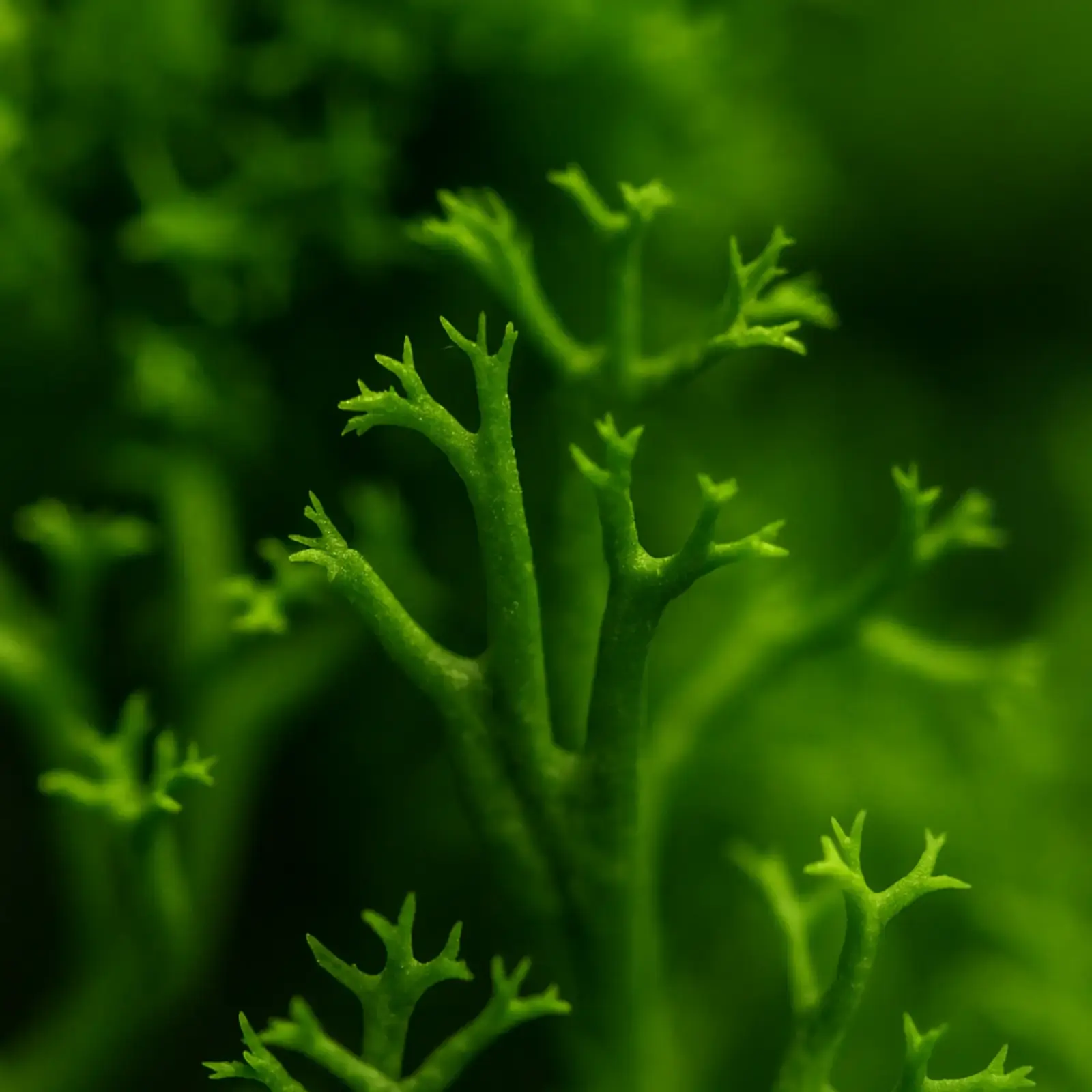
Cork and preserved plants, made to live together.
Cork supplies a natural surface and useful form; preserved plants add botanical colour and detail. Together they can become forest frames, desk organisers or custom presentation pieces. Preserved plants are real but no longer growing, and these combinations belong indoors with no watering or misting.
On this page
Why pair cork with preserved plants?
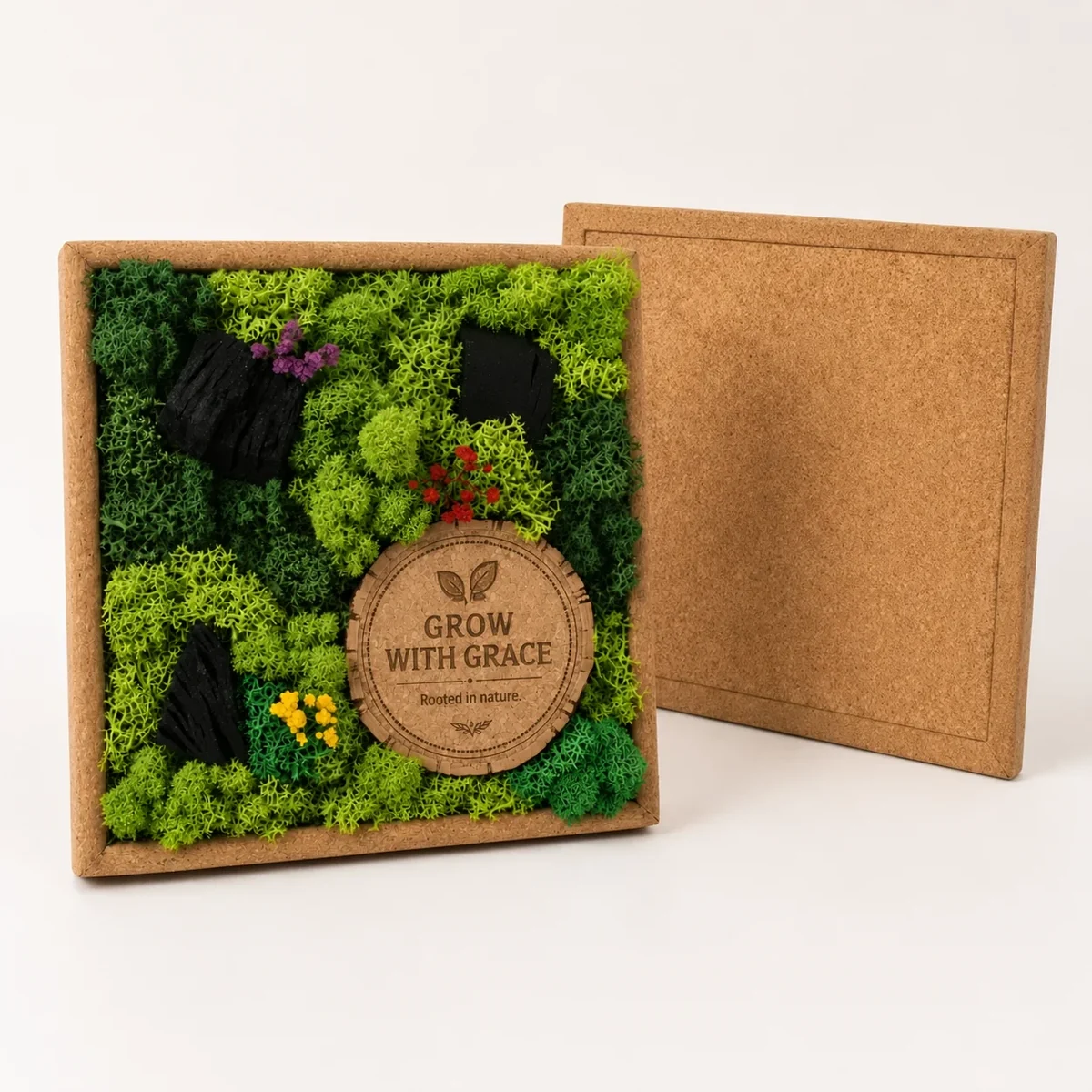
The two materials contribute different things. Cork brings a warm-toned surface, visible grain and a form that can become a frame, base, cup or box. Preserved plants bring botanical colour and detail. Together they can make nature part of an object that has a place in a room.
That place may be practical: a pen stand at a working desk, a tray that gathers everyday items, or a small presentation box. It may also be visual: a forest composition on a wall, or a scene protected by glass.
In bioQ's Forever Forest range, the preserved plants are real but no longer growing. The combination can therefore be chosen for botanical character without introducing a watering routine.
What are preserved plants, and are they alive?
Preserved plants are real botanical materials prepared to retain their decorative character. They are no longer growing and should not be treated as living houseplants. Adding water or mist is not part of caring for these pieces.
This makes the terminology important when choosing a gift. “Real” describes the origin of the botanical material. “Preserved” describes its state. Neither term means that a forest frame is a growing ecosystem.
A cork planter and a preserved-plant desk object are different offers. For example, bioQ's magnetic cork planter includes a glass test tube but does not include a plant. Check the components and care for the piece you choose. For a broader comparison, read live, artificial and preserved plants.
What does cork bring to a forest frame?
A cork frame gives a forest composition a natural border and a visible material connection to the botanical interior. The surface can work with green plants, bark and small decorative details without needing a highly polished surround.
The frame's construction still matters. Cork-facing can be combined with MDF for structure. Aqua compositions also use resin-water art: the water-like part is a designed material detail, rather than a pool of water to maintain.
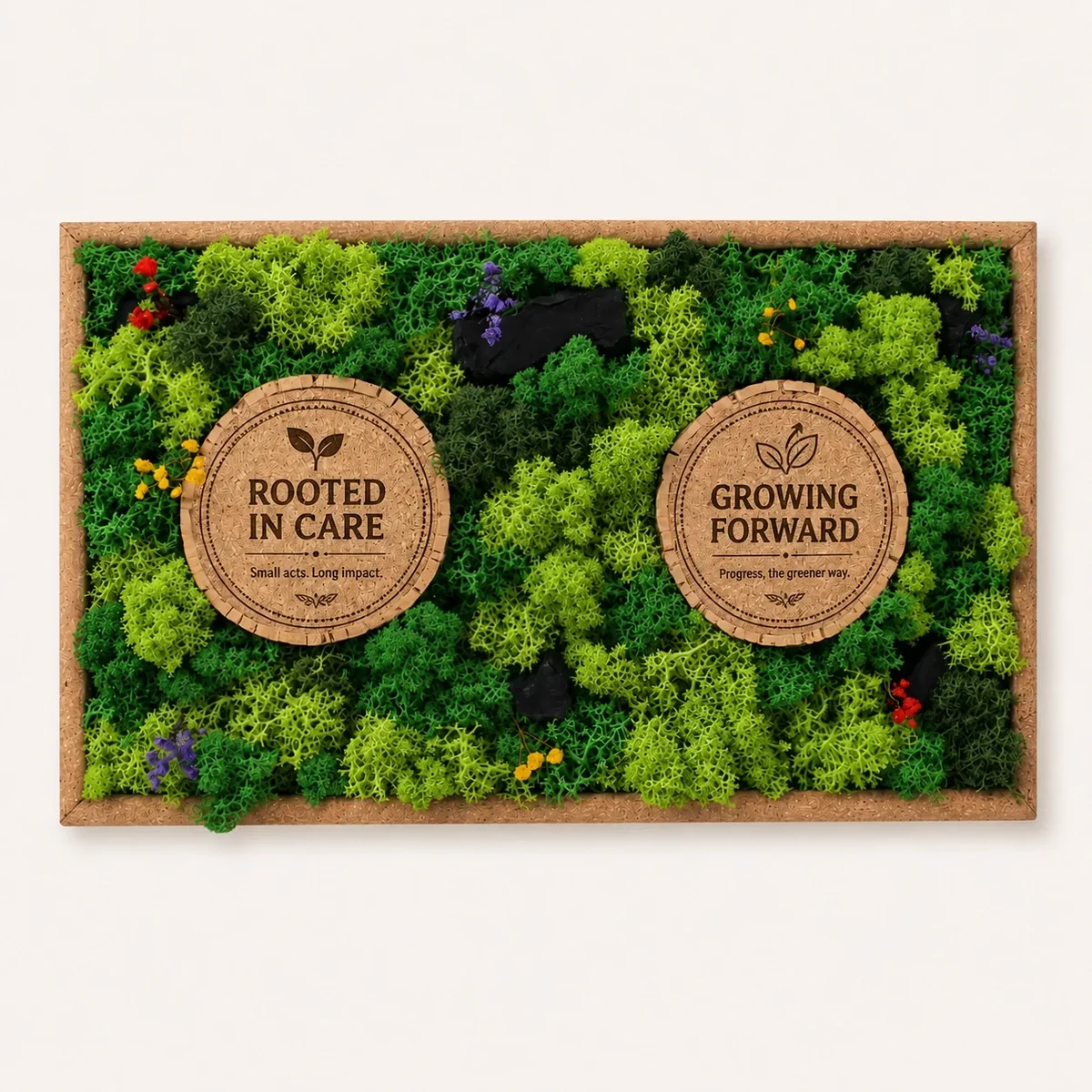
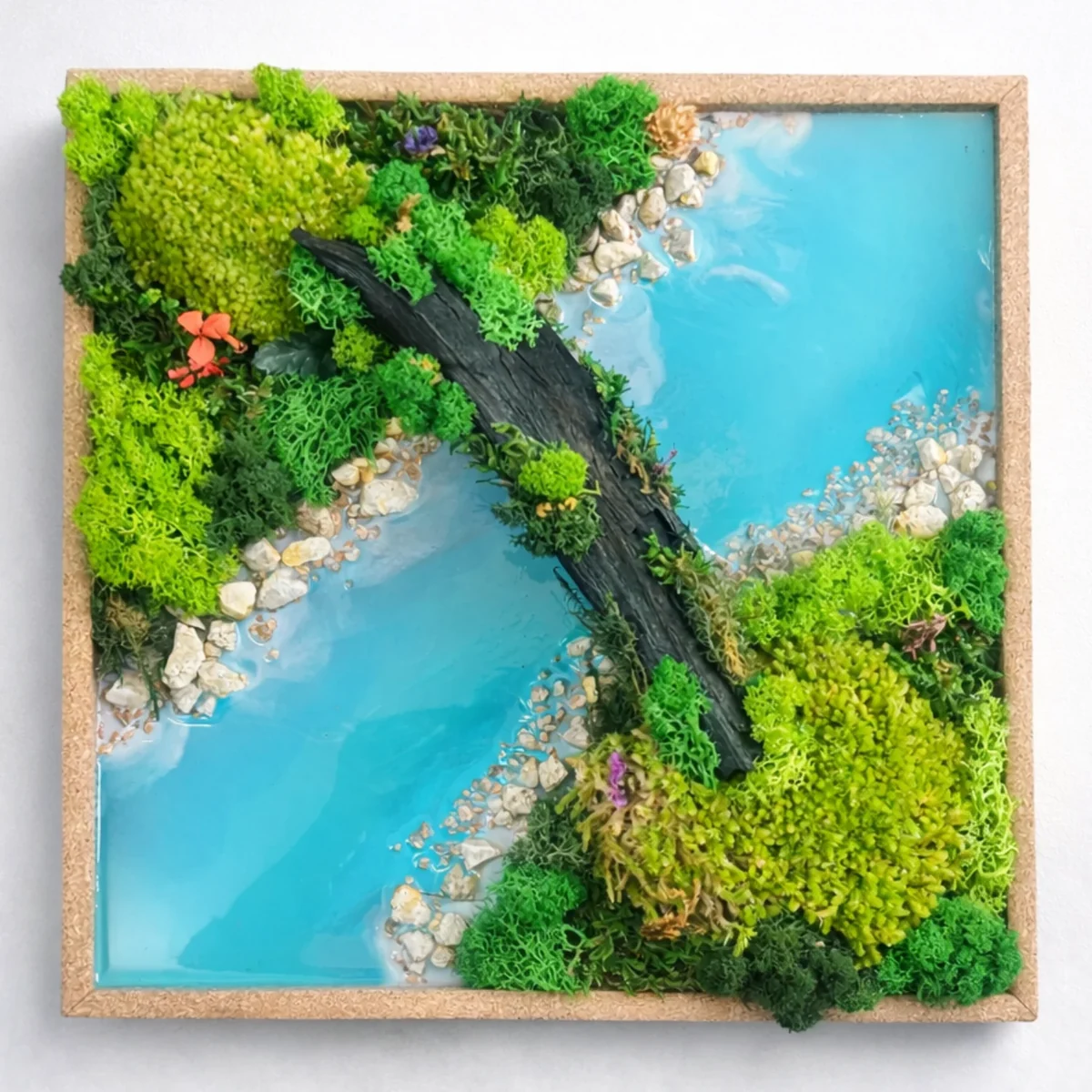
The cork forest-frame family includes Classic, Pro and Aqua formats. Compare the dimensions and composition with the intended wall or recipient in mind.
How can a forest object work on a desk?
A desk piece has to earn its space. Start with what it should hold or organise, then consider where the botanical detail belongs. A pen cup needs room for pens; a note holder needs accessible paper; a tray needs space for the objects it gathers.
bioQ's CorkScape and Grove pieces explore that combination. Cork forms useful surfaces and compartments, while preserved plants add a forest detail. Different arrangements suit different amounts of available desk space.
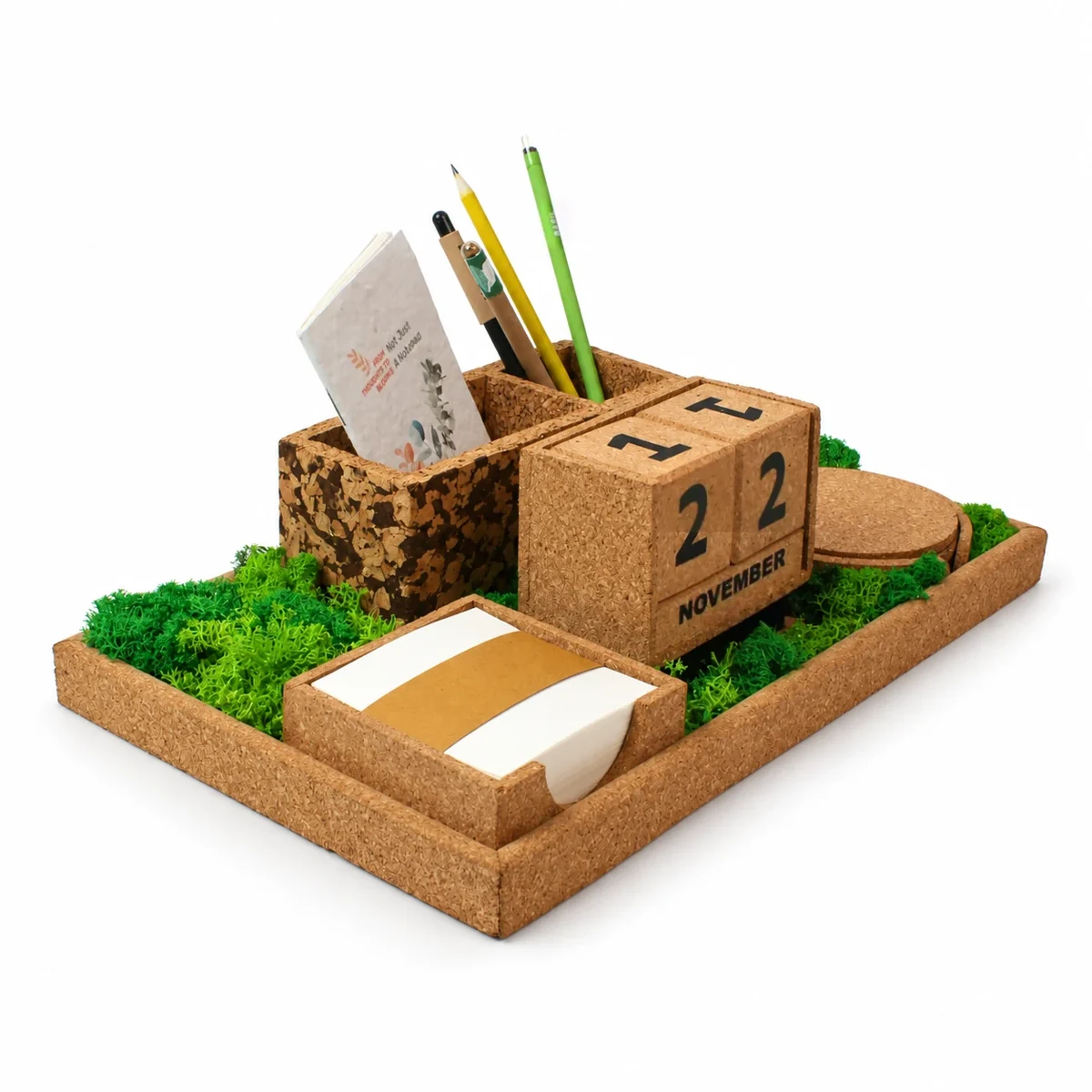
Consider the recipient's actual working area. A compact forest desk piece may be more useful than a large arrangement on a crowded table. A pod or dome offers another scale, using cork and glass around a small botanical composition.
Can cork and preserved plants become custom packaging?
They can also shape a presentation around an object. A small gift may need a particular recess, an interior arrangement or a lid that opens to reveal the contents. The material combination then becomes part of the opening experience.
For a sustainable energy company, bioQ made over 3,000 cork cufflink boxes, each 3 × 3 × 2 inches, with preserved moss inside. Separate wells gave each cufflink its own place. That project demonstrates a specific custom use of the materials.
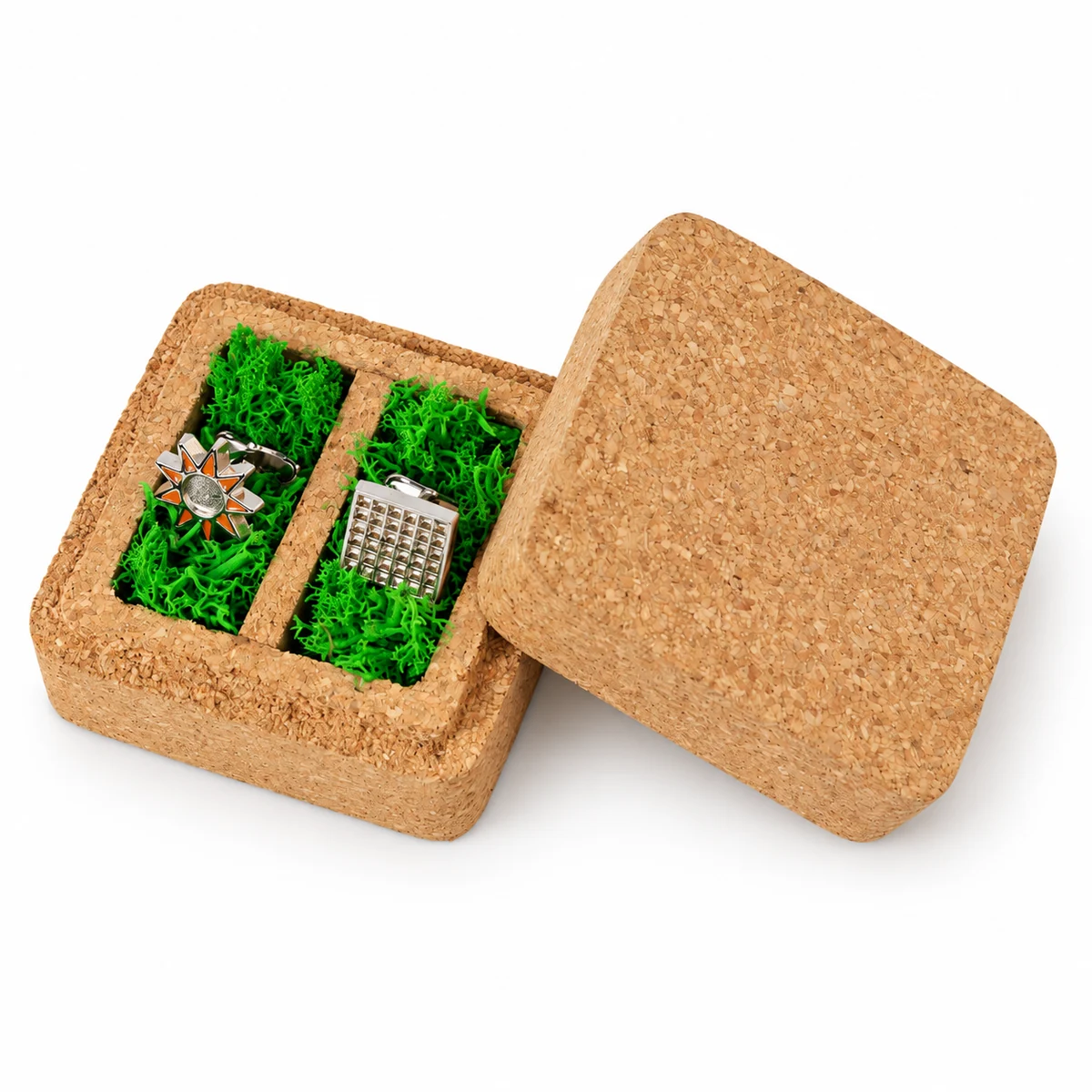
Read the custom cork cufflink-box case study. For another object, the conversation begins with what it needs to hold, how it should be seen and the quantity required.
How should you care for cork with preserved plants?
Care for the combination as a complete object. Preserved plants belong indoors, away from prolonged direct sunlight and heavy humidity. Do not water or mist them. Dust botanical areas gently rather than treating them like a washable surface.
For the surrounding cork, avoid soaking the object, particularly when it has an MDF core or other moisture-sensitive components. Follow the piece's supplied care instructions, and keep it away from places where splashes are routine.
| Piece | Choose by | Care consideration |
|---|---|---|
| Forest wall frame | Wall space, dimensions and composition | Indoor position away from prolonged direct sun |
| Desk organiser | Available space and daily tools | Keep botanical details dry |
| Pod or dome | Scale and glass/cork format | Handle the complete object with care |
| Custom presentation box | Contents, recesses and opening | Care for the cork, lining and contents together |
Explore cork with preserved plants, or use the custom-gift brief guide to plan a particular combination.
Questions about cork and preserved plants
Do preserved plants in a cork frame need water?
No. Preserved plants are real but no longer growing. Do not water or mist the piece. Keep it indoors, away from prolonged direct sun and heavy humidity, and follow its care instructions.
Is the blue area in an Aqua frame real water?
The Aqua cork-frame examples described here use resin-water art. The water-like scene is a material detail, rather than a pool of water that needs filling or care.
Can a cork-and-plant gift also be useful on a desk?
Yes. CorkScape and Grove formats combine botanical detail with functions such as pen storage, paper holding or organising everyday objects. Choose the arrangement by the recipient's available space and needs.
Sources and further reading
- bioQ: Forever Forest materials and care
- bioQ: cork products and constructions
- bioQ: the custom cork cufflink-box project
Industry references explain the material. bioQ examples describe the particular product or project shown.