Is cork carbon-negative? Follow the evidence.
Some cork products have measured negative carbon footprints within a defined assessment. That does not make every finished cork gift carbon-negative. The result depends on the product, the production process, the carbon removals counted and the life-cycle stages included.
On this page
What does carbon-negative mean for a product?
In a defined assessment, a negative carbon footprint means the greenhouse-gas removals counted are greater than the emissions counted. The result needs a product, a unit and a clear boundary: what was measured, where the measurement starts and where it ends.
That makes “carbon-negative cork” a question worth exploring carefully. A result for a particular cork stopper or an engineered cork component can be meaningful evidence. It is not a measurement of every other object that contains cork.
ISO 14067:2018 sets out principles and requirements for quantifying a product's carbon footprint, consistent with the ISO life-cycle assessment standards. It provides a framework for the calculation, rather than a universal carbon score for a material.
Why does the cork oak matter to the carbon story?
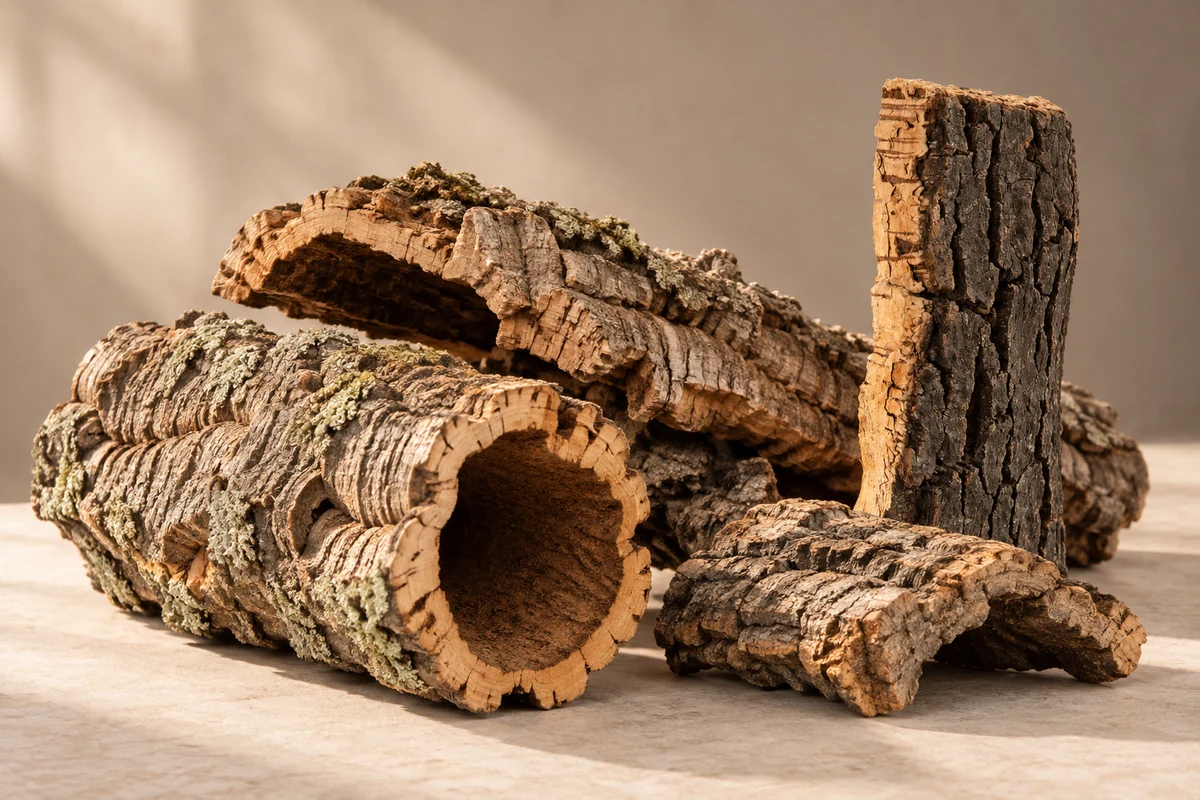
Cork begins as the outer bark of a living cork oak. A skilled harvest leaves the tree standing and able to form new bark. In Portugal, harvests must be at least nine years apart. APCOR explains the regeneration and harvesting rules.
As a tree grows, it takes up carbon. Some carbon is held in the plant material that becomes a product. A life-cycle study can account for carbon storage and removals alongside the emissions involved in producing that product.
The living tree is therefore an important part of cork's story. To understand a particular footprint, you still need to know how the study treats the forest, the material and the subsequent stages.
What evidence exists for negative cork footprints?
Amorim reported new certified carbon-footprint studies for its cork stoppers on 25 October 2025. Its account describes work carried out in accordance with ISO 14067 and independently verified by APCER.
The reported results for the analysed stoppers ranged from −28.72 to −56.4 grams of CO₂-equivalent per stopper. The date, the unit and the studied products are essential to understanding those figures. They are results for the stopper products in that report, not a saving that can be assigned to a coaster, diary or gift box.
Read Amorim's account of the certified studies. It is a useful example of how a material story can become a measured product claim, with a named method and verification.
Why do the assessment boundaries matter?
A calculation ending at the factory gate covers a different set of activities from one following the product through its life and disposal. Those approaches answer different questions. They should be read with their boundaries intact.
Amorim's life-cycle assessment overview describes studies that cover production to the factory gate, and studies that extend to the end of a product's life. Activities can include forestry, raw-material preparation, transport, manufacturing, finishing and packaging.
| Ask for | Why it matters |
|---|---|
| The named product and version | A result belongs to what was assessed |
| The unit | A stopper, kilogram or square metre are different quantities |
| The study boundary | It identifies which life-cycle stages are included |
| The method and verification | They explain how the result was produced and checked |
| The date and conditions | They help establish whether the result applies to the current product |
What changes when cork becomes a finished gift?
A finished gift can contain more than cork. A diary adds paper, binding and other components. A cork-faced tray can have an MDF core. A 5 mm cork yoga mat can have foam underneath. Packaging and transport form further parts of the product's story.
These constructions can make a cork surface useful for different purposes. They also mean that the environmental description should follow the complete item. A natural face alone does not establish the footprint, recyclability or compostability of the full construction.
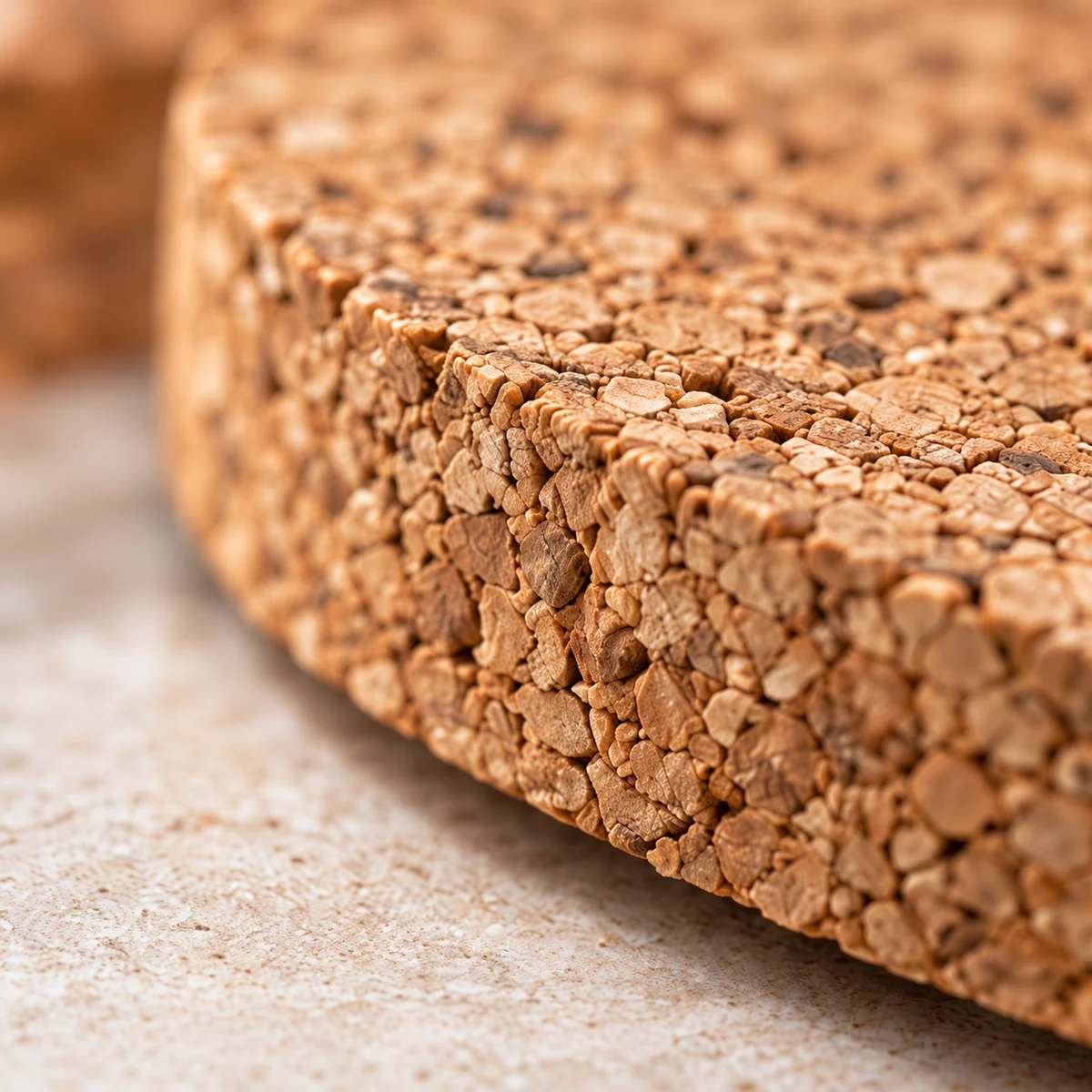
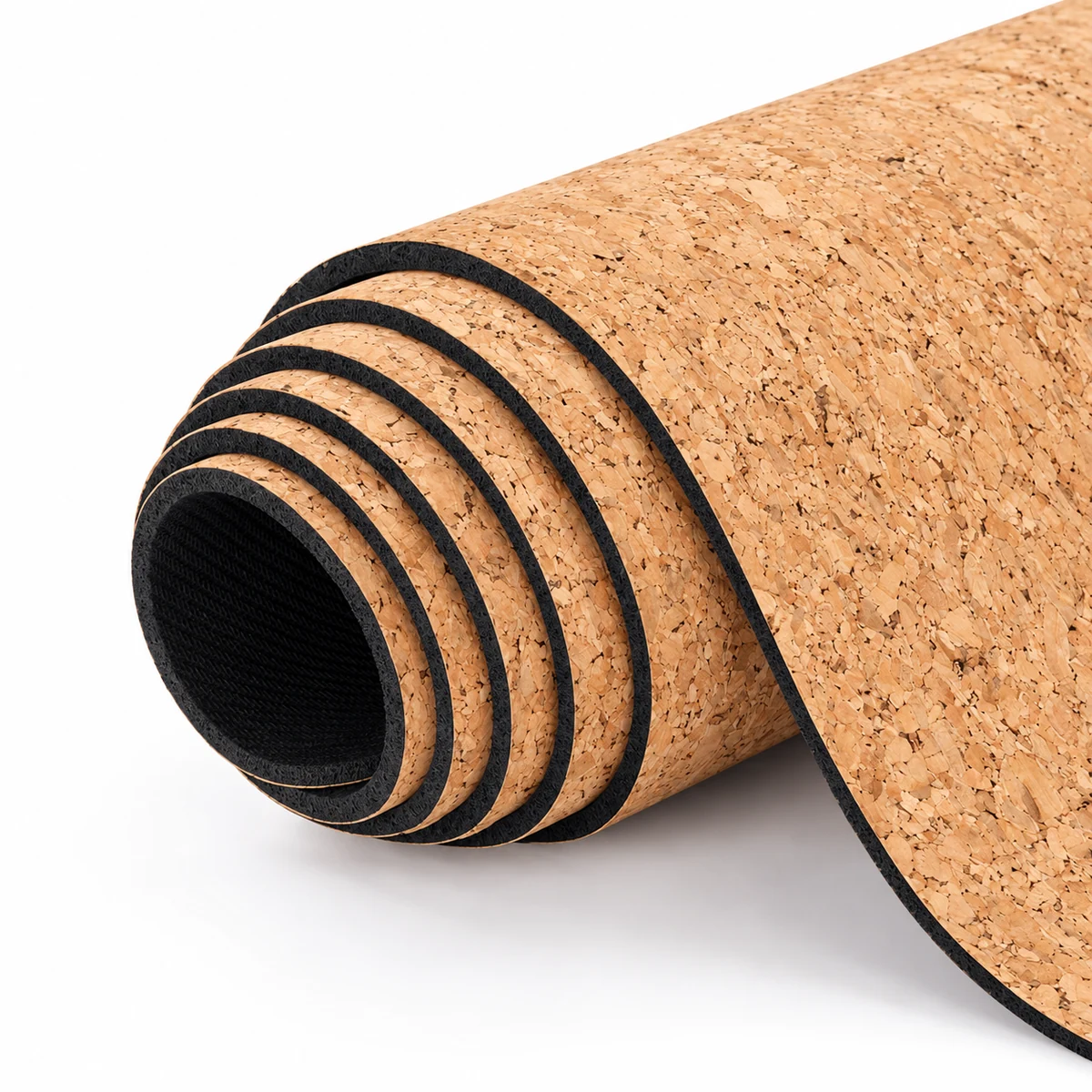
bioQ explains the constructions in its cork product range. A product-specific carbon-negative claim for a bioQ gift would require evidence for that finished item. This guide does not assign a carbon saving to it.
How can you choose a thoughtful cork gift?
Choose an object with a use the recipient can understand. A coaster belongs beside a cup. A reusable block calendar stays on a desk. A diary gives a place for ideas. A wellness mat has a place in a practice routine.
Then ask what is in the object, how to look after it and which environmental statements have supporting evidence. That approach gives you a gift story you can explain clearly, grounded in the actual piece.
For the next step, compare cork constructions, explore the material's useful properties, or prepare a custom corporate-gift brief.
Questions about cork and carbon claims
Is every cork gift carbon-negative?
No. A negative carbon footprint belongs to a defined product assessment. The materials, production process, carbon accounting and life-cycle stages included need to be checked for the finished gift.
Are renewable and carbon-negative the same thing?
No. Renewable describes a material source that can regenerate, such as cork bark. Carbon-negative describes the result of a defined carbon-footprint calculation in which the removals counted exceed the emissions counted.
Can a cork-stopper result be used for a bioQ coaster or diary?
No. A result stated per stopper is evidence for that studied stopper. A coaster, diary or other finished gift needs its own applicable evidence, including its complete construction and assessment boundary.
Sources and further reading
- APCOR: cork oak and bark regeneration
- ISO 14067:2018: carbon footprint of products
- Amorim: life-cycle assessments
- Amorim: certified stopper studies, 25 October 2025
Industry references explain the material. bioQ examples describe the particular product or project shown.