How cork becomes an everyday object.
Cork is the outer bark of the cork oak. It can be harvested while the tree stays standing, then prepared as sheets or granules for products ranging from coasters to covers. A finished cork gift may also contain a core, backing, binder or other components.
On this page
What is cork made from?
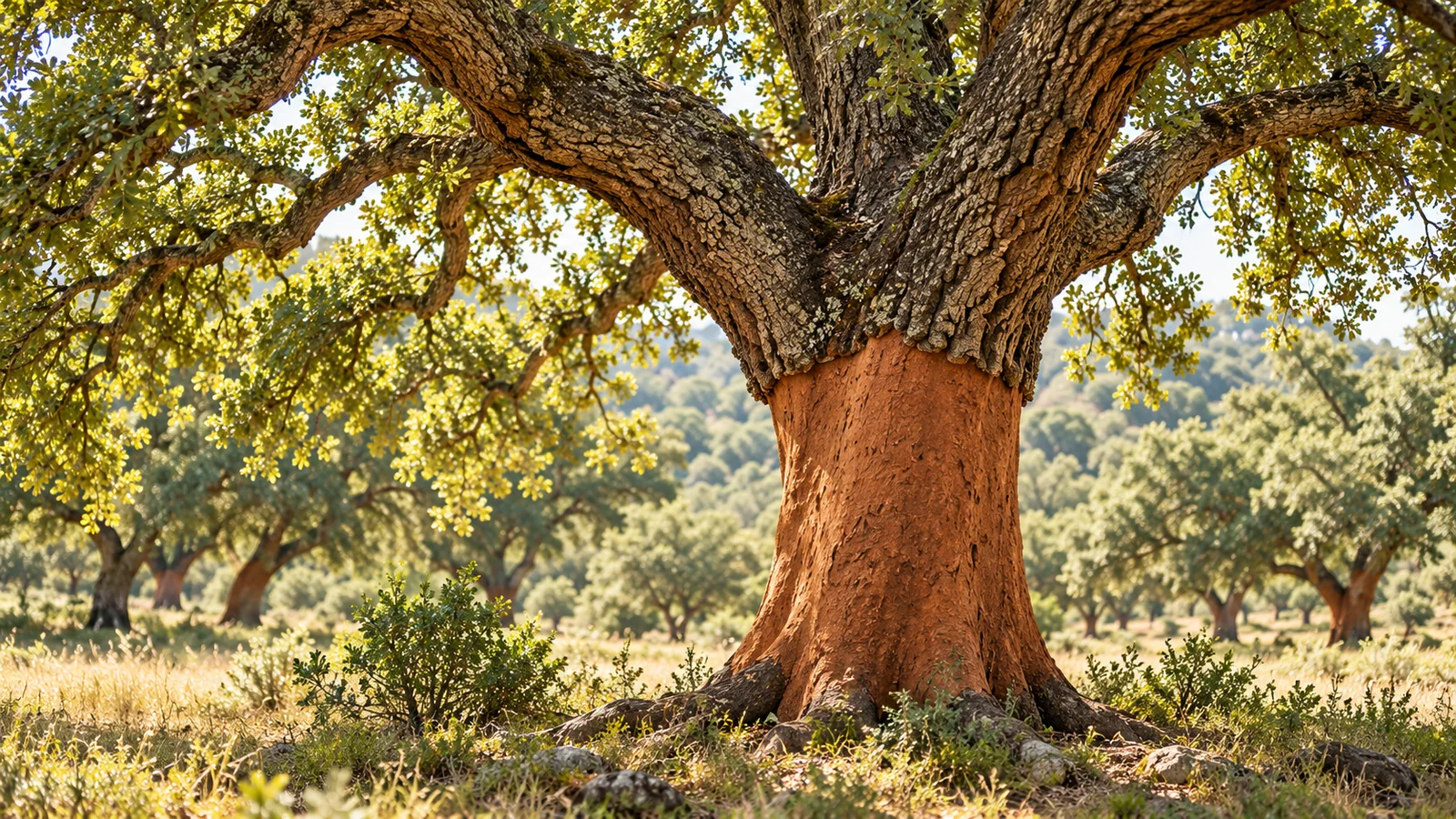
Cork is plant tissue from the outer bark of the cork oak, Quercus suber. It is the material you recognise in a bottle stopper, a coaster or the surface of a cork diary. Its grain can look quiet and fine, or coarse and expressive, depending on how the bark has been prepared.
A cork product is not necessarily a piece cut directly from a tree. Some objects use a thin cork surface. Others use cork granules formed into a larger shape. A tray or frame may combine cork with a rigid core, while a diary adds paper and binding.
Understanding those differences makes choosing a gift easier. You can appreciate the natural surface and still ask how the complete object is built. Amorim's material overview explains the bark and its cellular structure.
Does harvesting cork cut down the tree?
A skilled cork harvest removes the outer bark while leaving the tree standing. New bark forms after the harvest. In Portugal, the interval between harvests must be at least nine years. APCOR describes the tree's regeneration and the harvesting rules.
The distinction matters: bark is collected from a living tree rather than using the whole trunk as the material. That is a central reason cork is described as renewable. It describes the material's origin; it does not establish the origin or environmental footprint of every finished gift.
- The tree grows.Cork forms as the outer bark of the cork oak.
- The bark is harvested.A skilled harvest leaves the tree standing.
- The material is prepared.Cork is selected and processed for its intended use.
- An object takes shape.Sheets, granules and other components become a particular product.
How does bark become a usable material?
Harvesting is the beginning. Bark needs preparation before it becomes a reliable working material. For cork destined for stoppers, the process includes resting and preparation, followed by selection and cutting. Cork that is suited to another use can follow a different processing route. APCOR's transformation guide follows the preparation and selection stages.
For a gift buyer, the useful question is what the maker has done with the material. Has it been used as a thin facing? Have granules been combined into a form? Is the cork supported by MDF, paper, fabric or foam? Those choices explain much more about an object than the word “cork” on its own.
Sheets, granules and cork-facing: what is the difference?
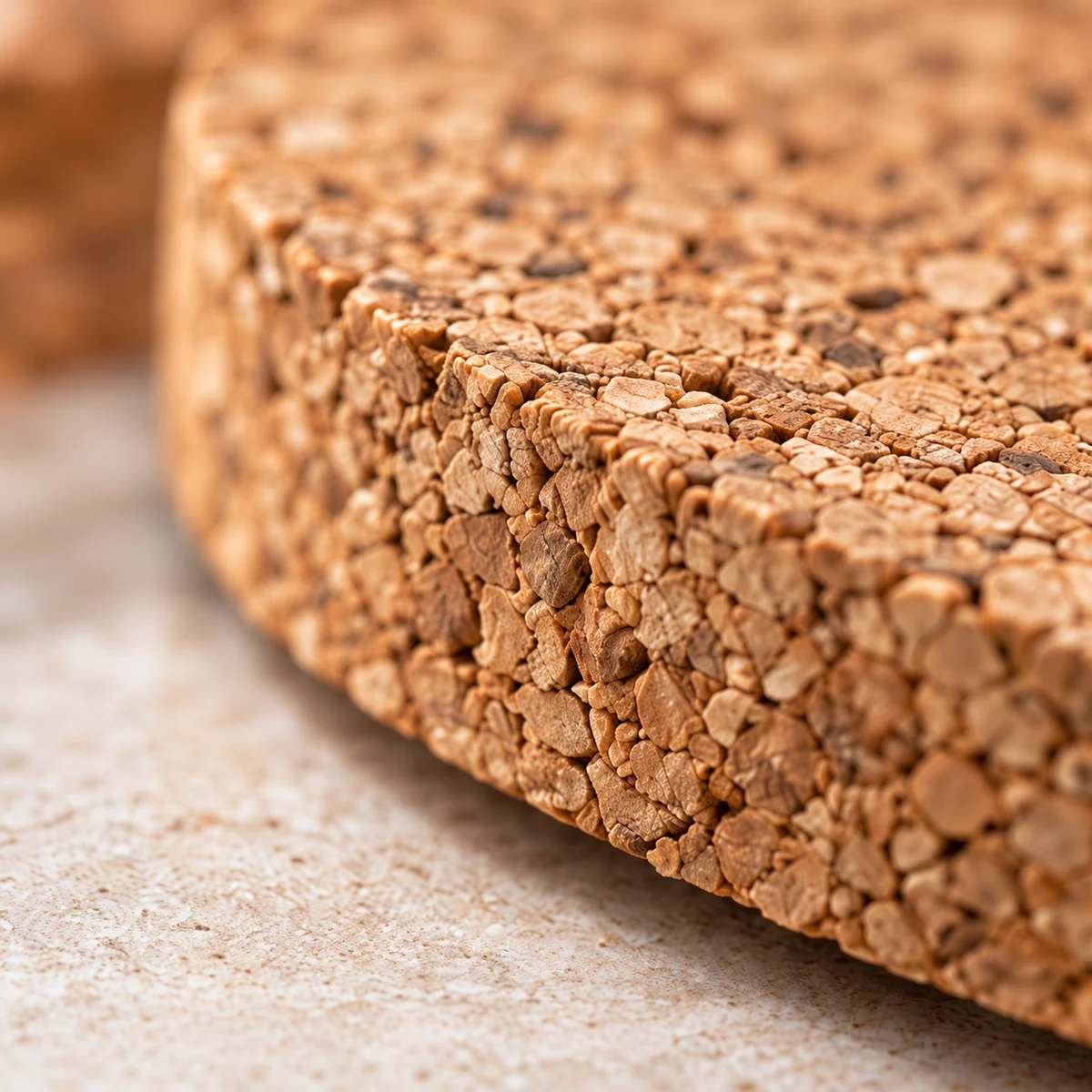
A sheet can bring cork's look and touch to an object whose structure comes from other materials. Granulated cork can be formed into useful shapes. Engineered cork products may use binders chosen for the application; the formulation should be checked for the particular product. Amorim's Corecork brochure gives an industrial example of granules combined with a tailored binder.
| Construction | What it contributes | An everyday example |
|---|---|---|
| Cork through the piece | The grain and form of a cork body | A cork coaster or ball |
| Cork cover or surface | Natural texture over another construction | A diary cover or accessory |
| Cork-facing over a rigid core | A cork exterior with structural support | A cork-faced MDF tray or frame |
| Cork with a backing | A surface and a supporting layer working together | A mousepad or foam-backed yoga mat |
How does this translate into cork gifts?
Start with the job of the object. A coaster provides a place for a cup. A tray gathers things together. A diary needs a cover, a binding and pages. A cork yoga mat needs to be considered as a complete mat, including its backing and thickness.
In bioQ's range, the CK51 and CK52 trays use a cork-facing surface over an MDF core. Cork diaries combine their covers with paper and other components. The 5 mm cork yoga mat has foam underneath. These are different ways to use cork, with different care and end-of-use considerations.
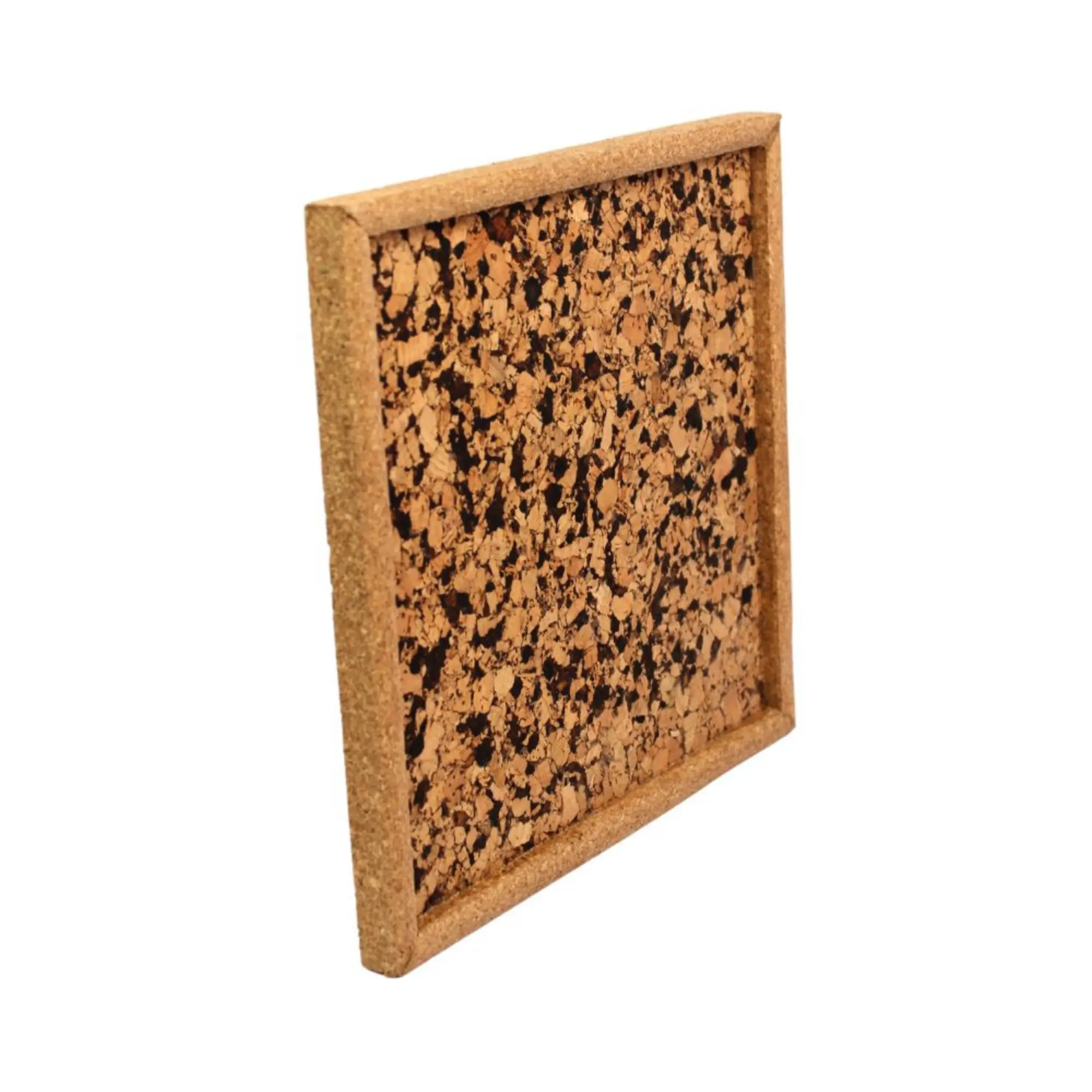
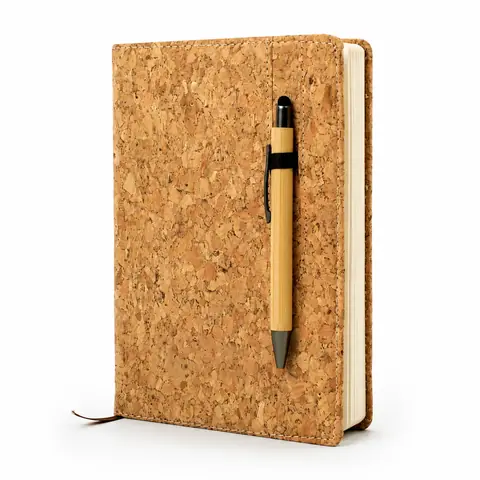
Explore the tray formats, cork diaries and wellness pieces to see how the material moves between uses.
What should you check before choosing a cork product?
Ask what the piece is made to do, what else is in it and how it should be cared for. A useful description should identify the format and relevant components. A sample can help when the feel, granule pattern or a particular finish is important to the brief.
- Use: a table, desk, practice space or presentation box.
- Construction: the cork surface or body, plus core, backing and fittings.
- Format: dimensions, thickness and what is included.
- Care: cleaning, moisture exposure and storage.
- Presentation: artwork, packaging and the version to approve.
For the science behind the feel, read cork's properties and uses. For the environmental question, follow the cork carbon story. A custom cork gift brief brings those choices together.
Questions about cork and its construction
Is cork a type of wood?
Cork is the outer bark tissue of the cork oak. It is different from the wood of the trunk. A finished object can combine cork with wood or an engineered wood core such as MDF.
Is every cork product solid cork?
No. Products can use a cork body, a thin cork surface, cork-facing over a core, or cork with a backing. Read the description of the complete piece rather than assuming its construction from the surface.
Does a natural cork surface mean the whole gift is biodegradable?
No. The finished item may contain a binder, core, backing, adhesive, coating or fittings. An end-of-use claim needs to consider all of those components and the conditions under which the item will be handled.
Sources and further reading
- APCOR: the cork oak
- APCOR: transformation process
- Amorim: what cork is
- Amorim Cork Solutions: Corecork materials
Industry references explain the material. bioQ examples describe the particular product or project shown.