

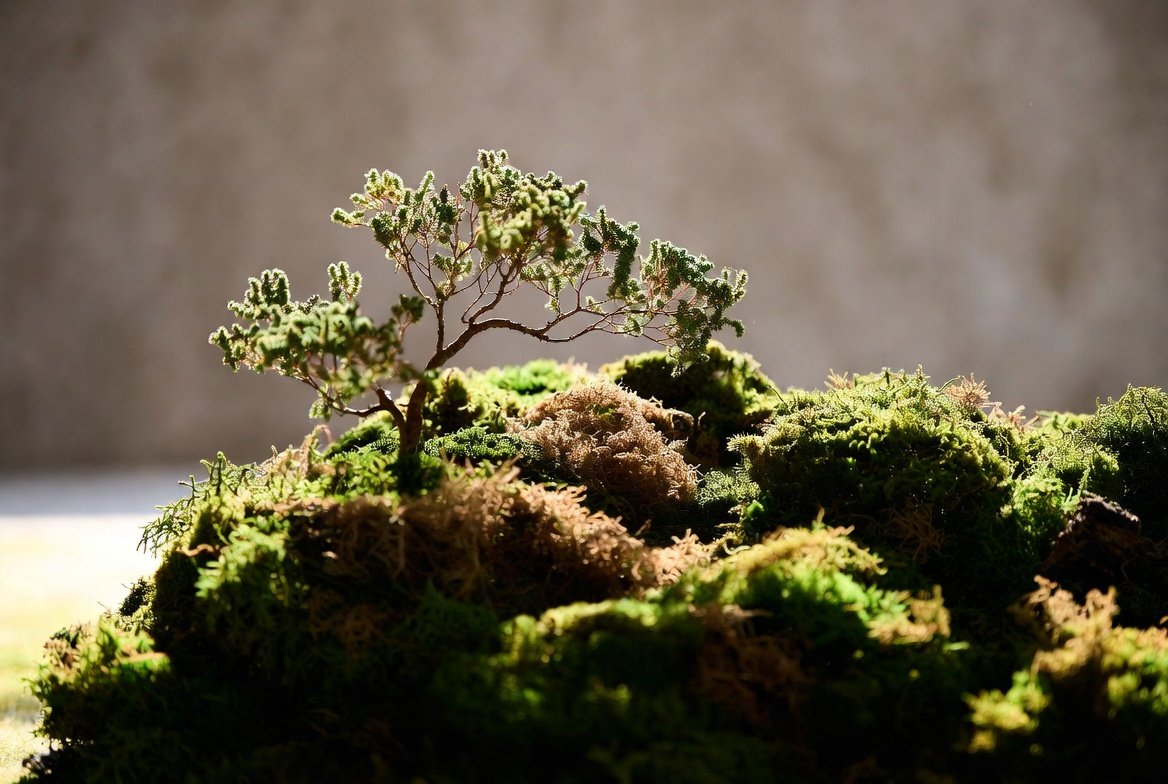
A room with greenery can feel more settled. But a live plant also asks for light, water and regular attention. On a desk, or in a busy office, that care can be hard to keep up.
That is the trade-off behind the title: people may want the presence of nature without adding another routine to the week. It is worth taking seriously rather than treating as an excuse, because the pattern is consistent enough to plan around.
This article is about the gap itself, how it opens, where it opens, and what it means for anyone deciding what to put on a desk. If you want the comparison between the three material options, that is covered in live plants versus artificial versus preserved. Here the subject is the week, not the material.
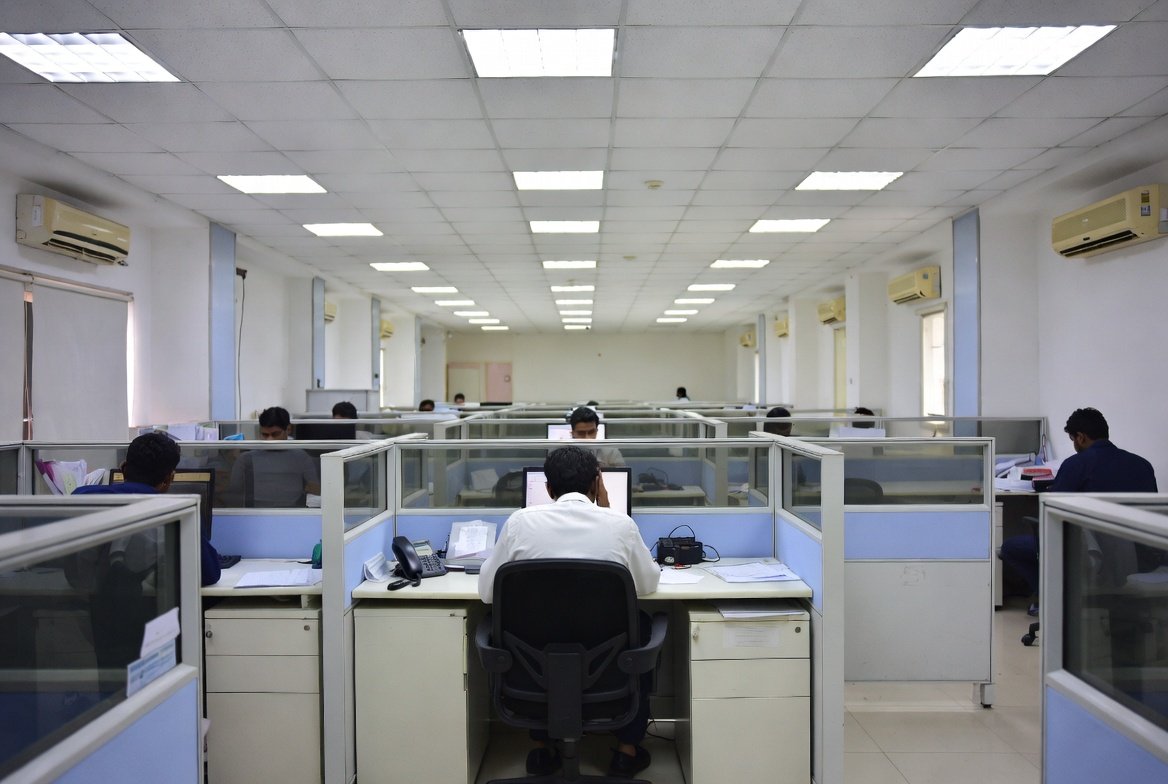
Where the gap shows up
A seed kit or a new houseplant offers the promise of greenery. It only delivers on that promise when someone has the time, conditions and patience to grow or maintain it.
Plants need consistency, and consistency is the thing a working week is worst at supplying. Long hours, travel, irregular schedules, poor light and dry air all work against it. None of these are dramatic. That is precisely why they win.
The week that breaks the routine
Plant care fails in ordinary, specific ways. It is useful to name them, because each one is a design problem rather than a character flaw.
- Leave and travel. A plant needs attention on a schedule that does not pause. A four-day trip is not a crisis; a four-day trip during a hot week, twice a quarter, is.
- The handover nobody makes. Almost nobody asks a colleague to water their desk plant before going away, because it feels like too small a thing to ask and too awkward to explain. So it goes unasked.
- Moving desks. A plant chosen for one position gets carried to another with different light, and the choice that made it work quietly stops applying.
- Hot-desking. If the desk is not reliably yours, the plant is not reliably anyone's. Shared surfaces produce shared inaction.
- Long weekends and shutdowns. A three-day weekend is fine. A week-long office closure in peak summer, with the air conditioning off, is a different proposition entirely.
- The slow ones. Under-lighting does not produce a visible event. The plant simply becomes gradually less good over months, until it is past the point where anyone would think to intervene.
Notice that only one of these is about forgetting to water. The rest are about circumstances, ownership and light. That is why "just remember to water it" is not the fix people assume it is.
The plant nobody owns
Offices have a particular version of this problem. A plant on a personal desk has, at least in principle, one responsible person. A plant on a reception counter, a meeting-room table or a shared shelf has none.
Shared plants tend to receive attention in bursts. Someone notices it looks dry and waters it; a week later someone else notices the same thing and waters it again; then nobody does for a month. The pattern is worse than a single owner would produce, and it is nobody's fault. Responsibility that belongs to everybody is a routine that belongs to nobody.
The same logic explains why office plant schemes usually work when they come with a maintenance contract, and usually do not when they come with goodwill. The contract creates an owner. Goodwill does not.
What people are actually asking for
It helps to separate two different wants that get expressed with the same sentence.
Some people want the practice: the checking, the growth, the small ongoing relationship with a living thing. For them a plant is not a maintenance cost, it is the entire point, and no substitute is a substitute.
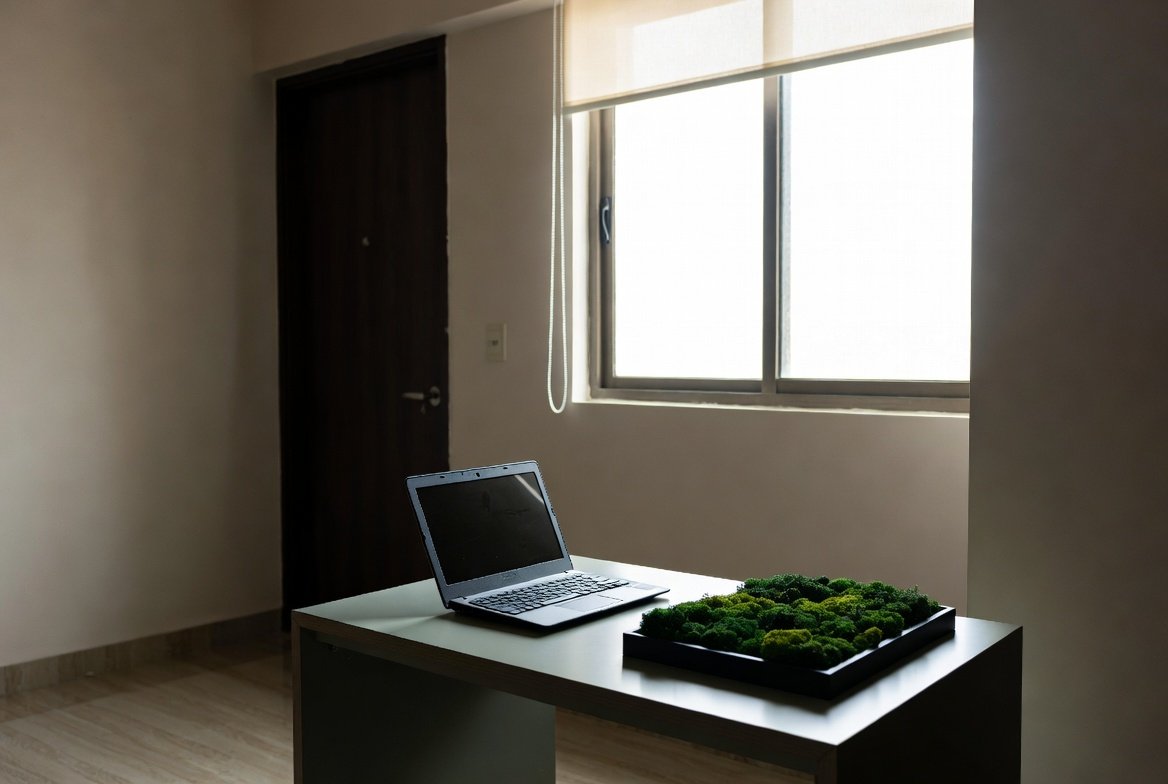
Others want the effect: natural texture and colour in a room that would otherwise be flat, hard-edged and grey. They are not looking for a hobby. They are looking for the room to feel less like a spreadsheet.
Both are legitimate. The mistake is answering the second want with an object built for the first, and then treating the predictable outcome as a personal failing. Someone who wanted the effect and received a plant has been handed an obligation they did not ask for.
What this means for gifting
Gifting sharpens the problem, because a gifted plant transfers work to someone who had no say in accepting it.
The giver sees a thoughtful, natural, sustainable-feeling gesture. The recipient receives an object with conditions attached: it needs a position with the right light, a watering rhythm and a plan for the weeks they are away. If any of those are missing, the gift becomes a slowly declining reminder on their desk, and the reminder points back at the giver.
At scale the arithmetic gets uncomfortable. A hundred plants go to a hundred desks with a hundred different light conditions and a hundred different levels of interest. A predictable share of them will not survive the quarter, and the ones that do not will be the most visible thing the programme produced.
This is not an argument that live plants are a bad gift. It is an argument that they are a good gift for a specific audience, chosen deliberately, rather than a safe default for everybody.
Ask whether you could name, for a typical recipient, where the object will sit and who will look after it while they are on leave. If the honest answer is no, the gift needs to be something that does not require an answer.
Why preserved botanicals are gaining relevance
Preserved botanicals are made from real plant material. Under controlled conditions, a bio-based preservation blend gradually replaces the plant's natural moisture, and the material is then selected and arranged by hand. They need no watering routine, and when kept indoors, dry and away from direct sunlight, they can remain on display for years: 3 or more for open pieces, 5 or more for enclosed ones.
The relevant property is not that they last longer. It is where the decision sits. With a live plant, the outcome depends on a long series of small decisions made by whoever ends up responsible. With a preserved piece, it depends almost entirely on one decision made at the start: where to put it. Keep it out of damp and out of direct sun, and the rest takes care of itself.
For a gift, that difference matters more than it first appears, because the giver can get the one decision right by explaining it once, and cannot get the long series right at all.
What preserved pieces do not do
They are not a complete answer, and the limits should be stated plainly rather than discovered later.
- They do not produce oxygen. The preservation process stops biological activity, so there is no photosynthesis. If air quality is the goal, this is not the product that addresses it.
- They do not grow. Nobody gets the satisfaction of watching something develop. For a person who wanted the practice rather than the effect, that absence is the whole objection.
- They are not indestructible. Damp and direct sunlight both damage them, which is why the care guidance names those two conditions specifically.
- They are display objects. They should not be ingested, and that is worth knowing in a home with small children or pets.
Choosing honestly
The useful question is not which option is better. It is which one still makes sense in three months, in the actual room, with the actual person.
Where there is good light and someone who genuinely wants to look after a plant, a live plant is the better object and preserved pieces are not competing for that spot. Where the light is poor, the desk is shared, the recipient is unknown or the object has to survive without an owner, a preserved piece is the one that will still be there and still look like it did on the first day.
Wanting nature without the work is not a lesser version of wanting nature. It is an accurate reading of a week that already has enough in it.
Questions people ask
Why do many people fail at growing plants at home?
Live plants need consistent care. Irregular watering, poor light, busy schedules and travel can make it difficult to keep them healthy indoors. In most cases the constraint is light rather than water, because indoor light is usually weaker and more directional than it appears to the eye.
Is wanting low-maintenance nature a sign of laziness?
No. It can simply reflect the time and conditions available. Enjoying nature and having room for a plant-care routine are two different things, and a person can genuinely want the first without having space for the second.
Do preserved botanicals completely replace live plants?
No. They serve a different purpose. Live plants are still preferred by people who enjoy caring for them and have the right conditions. Preserved pieces are for the desks, shared surfaces and low-light positions where a care routine was never realistic.
Why do office plants fail more often than home plants?
Because ownership is weaker and conditions are harder. Interior desks are often far from natural light, air conditioning keeps the air dry, and shared surfaces have no single person responsible. A plant that would do well in a bright home window can be badly under-lit on an office desk that feels perfectly well lit to a person.
Is a live plant a good corporate gift?
It can be, for a defined audience who have suitable light and want one. As a default gift for a large group it is riskier, because it transfers an ongoing obligation to recipients whose desks and interest levels you cannot see, and the ones that do not survive become the most visible result of the programme.
What care does a preserved piece actually need?
Keep it indoors, keep it dry, keep it out of direct sunlight, and dust it gently when it needs it. There is no watering, misting or feeding. Cleaning methods that involve moisture should be avoided, since water is the thing the material is protected from.
How long will a preserved piece stay presentable?
Under recommended indoor conditions, open pieces can remain on display for 3 or more years and enclosed pieces for 5 or more. These are expectations under suitable conditions rather than guarantees, and placement is the single largest factor in whether they hold.
Would an artificial plant not solve the same problem?
It solves the maintenance part. It does not solve the material part: artificial greenery contains no plant material, tends to read as synthetic at desk distance, and collects dust it cannot shed. Preserved pieces sit between the two, with real botanical material and no watering routine.
Can preserved pieces go in a meeting room or reception with no natural light?
Yes. They do not need light to survive, so interior rooms and windowless spaces are among the places they suit best. The conditions to avoid are damp and direct sun, neither of which is usually a feature of an interior meeting room.
Want nature without the daily responsibility?
Explore preserved-nature desk pieces and gifting formats built for real modern routines.
