
Environmental words are often used as if they mean the same thing. They do not. Some describe where a material comes from, some describe how it was produced, some describe what may happen after use, and others are broad ambitions rather than measurable product facts.
Are green, eco-friendly, organic and sustainable the same thing?
No. “Green” and “eco-friendly” are broad marketing descriptions. “Sustainable” can refer to a much wider environmental, social and economic system. “Organic” usually refers to production under a defined agricultural standard. None of these words automatically means recycled, recyclable, biodegradable, compostable, plantable or impact-free.
For a corporate buyer, the practical rule is simple:
Replace the broad word with the specific fact you can prove.
Instead of saying “This is a 100% sustainable gift”, identify the relevant component and attribute: “The notebook cover is made with cork” or “The packaging sleeve uses recycled paper”, where verified.
Why does interchangeable language create a problem?
When a familiar word is used too broadly, the reader may assume more than the evidence supports.
For example:
- “Natural” may be read as safe, organic, biodegradable and low-impact, even though it establishes none of those things by itself.
- “Recycled” may be confused with “recyclable”, although one describes past material input and the other describes a possible future process.
- “Bio-based” may be read as “biodegradable”, even though a bio-based polymer may not biodegrade or compost.
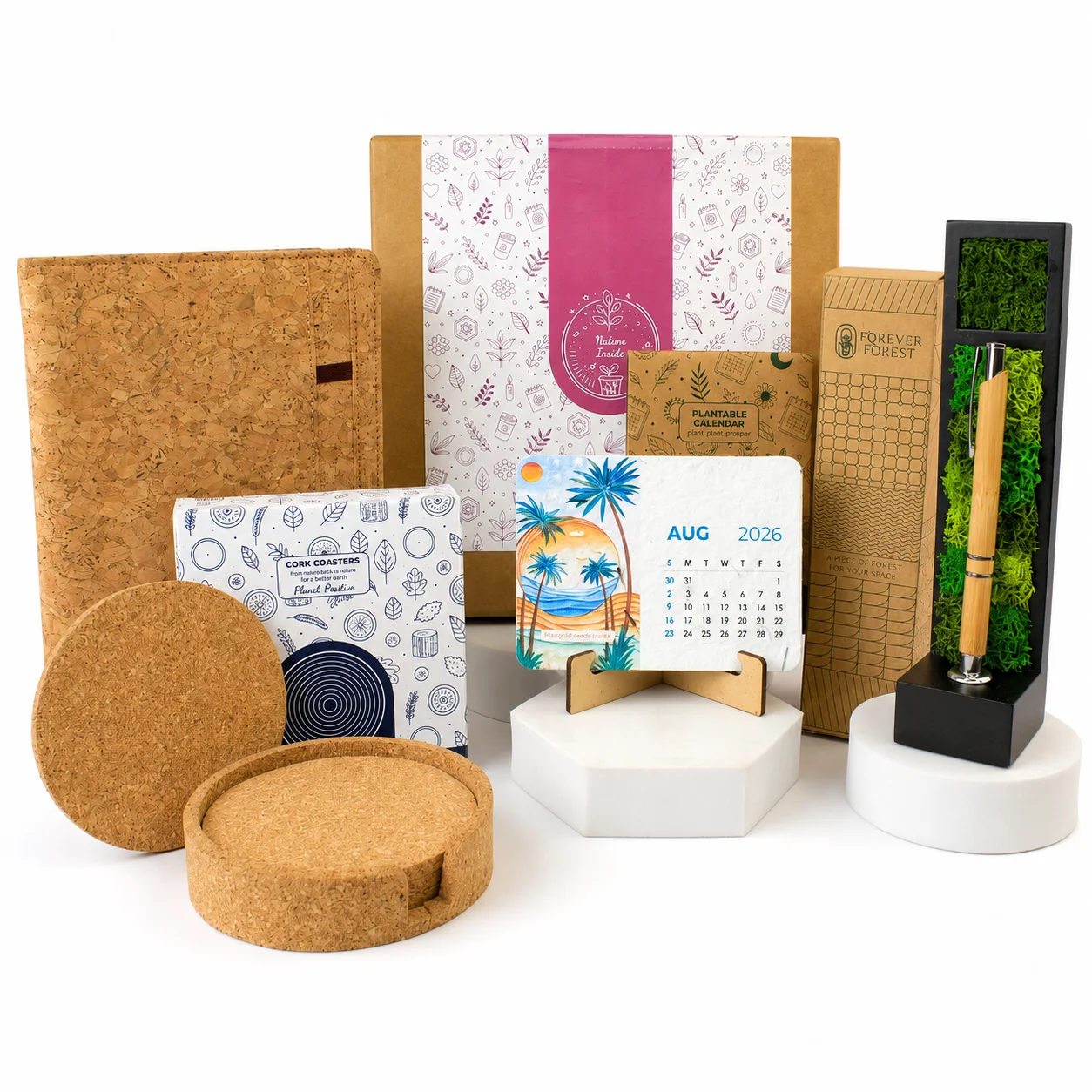
- “Plantable” may be applied to an entire gift when only one paper card contains seeds.
The Advertising Standards Council of India’s environmental-claims guidance says that absolute claims such as “environment friendly”, “eco-friendly” and “sustainable” need robust substantiation when they imply an environmental benefit for the complete product. It also says claims should make clear whether they refer to the product, packaging or only one part.
The problem is therefore not only whether a sentence is technically false. A sentence can also mislead by omitting its scope, conditions or limitations.
Broad environmental terms
These words are widely understood but often too general to stand alone.
Green
What it usually suggests
An informal idea that a product, company or behaviour is environmentally preferable.
What it does not prove
It does not identify a material, process, comparison, lifecycle stage or measured benefit. There is no useful product decision hidden inside the word by itself.
Evidence to request
Ask which specific environmental attribute the speaker means.
Clearer wording
Instead of “green stationery”, say “stationery with a recycled-paper body” or another verified component fact.
Eco-friendly or environmentally friendly
What it usually suggests
That a product causes less environmental harm or provides an environmental benefit.
What it does not prove
It does not identify the comparison, scope or lifecycle evidence. Used without qualification, it may imply that the whole product has little or no adverse impact.
Evidence to request
Ask “friendlier than what?” and “for which component or lifecycle stage?” A meaningful comparison needs a stated basis.
Clearer wording
Instead of “an eco-friendly gift box”, say “the outer box uses recycled paper and no plastic lamination”, where both facts are verified.
Sustainable
What it usually suggests
That environmental, social and economic needs can be supported over time.
What it does not prove
It is not a single material property. A cork cover, recycled-paper sleeve or reusable format does not establish that a whole product, supply chain or company is sustainable.
Evidence to request
Ask which impacts, boundaries, time period and evidence support the statement. General product claims may require lifecycle-level support.
Clearer wording
Name the specific design choice: “designed for repeated desk use”, “made with a cork cover” or “uses recycled-paper packaging”.
Environmentally responsible
What it usually suggests
That environmental effects have been considered and managed.
What it does not prove
It does not show which effects were considered or whether the product performs better than another option.
Evidence to request
Ask what decision, policy or measurable feature makes the product more responsible.
Clearer wording
Describe the decision: “Packaging was reduced to the protective box and instruction card”.
Origin and composition terms
These words describe where a material comes from or what it contains. They are not automatic end-of-use claims.
Natural
What it usually means
That a material comes from a plant, mineral, animal or other naturally occurring source.
What it does not prove
Natural does not automatically mean organic, non-toxic, renewable, biodegradable, responsibly sourced or environmentally preferable. Natural materials may still require intensive processing or be combined with synthetic materials.
Evidence to request
Ask for the exact material and its role in the product.
Clearer wording
Say “natural cork surface” or “real preserved botanical material” instead of using “natural gift” for the complete object.
Organic
What it means
Organic is generally a standard-based production term for agricultural products and materials. It refers to an applicable production system and certification scope, not simply to something that came from nature.
India’s National Programme for Organic Production describes an organic agricultural system and maintains accredited certification arrangements. The relevant certification should cover the named ingredient, fibre, food or agricultural material.
What it does not prove
Organic does not automatically mean biodegradable, compostable, locally produced, pesticide-free in an absolute sense, low-carbon or suitable for disposal in soil.
Evidence to request
Ask which standard, certificate, operator and product or material scope supports the word.
Clearer wording
Say “made with certified organic cotton” only when the relevant cotton and product claim are supported. Do not call a complete mixed-material hamper organic because it contains one certified food or fibre item.
Recycled
What it means
The named material or component contains material recovered from an earlier use or waste stream.
What it does not prove
It does not mean the entire product is made from recycled material, that the content is 100%, or that the product can be recycled again.
Evidence to request
Ask which component is recycled, whether the material is pre-consumer or post-consumer where relevant, and what percentage can be documented.
Clearer wording
Say “the pen body uses recycled paper” or “the base is made with recycled polymer”, where verified. State a percentage only when the specification supports it.
Renewable
What it means
A resource can be replenished through natural or managed cycles. Plants, forestry materials and some marine resources may be renewable when appropriately managed.
What it does not prove
Renewable does not automatically mean responsibly sourced, low-impact, biodegradable or available without ecological limits.
Evidence to request
Ask what the resource is, how it is sourced and what standard or chain-of-custody information applies.
Clearer wording
Name the material and source evidence rather than relying on “made from renewable resources” alone.
Bio-based
What it means
A bio-based material is made wholly or partly from biological resources rather than only fossil raw materials. USDA’s BioPreferred programme describes bio-based products as containing biological products such as agricultural, marine or forestry materials.
What it does not prove
Bio-based does not mean biodegradable or compostable. A polymer can be partly bio-based and still behave like a conventional long-life plastic after use.
Evidence to request
Ask for the exact resin or material, percentage of bio-based content, test method and certification where claimed.
Clearer wording
Say “this component contains X% verified bio-based content” rather than “made from plants” when the product is only partly bio-based.
Bioplastic, biopolymer or algae-based material
What these terms may mean
They are umbrella or material-family descriptions. Depending on the formulation, they may refer to biological feedstock, biological production, biodegradation behaviour or a combination.
What they do not prove
They do not automatically establish fossil-free content, compostability, biodegradation in nature, recyclability or a lower whole-life impact.
Evidence to request
Ask for the exact material name, feedstock, composition, performance specification, applicable certification and realistic end-of-use route.
Clearer wording
Describe the verified component: “the casing uses an algae-containing polymer blend” or “the part uses a certified compostable resin under stated industrial conditions”, if accurate.
Use and end-of-use terms
These terms describe an intended behaviour during or after use. Their conditions matter.
Reusable
What it means
The product is designed to be used repeatedly rather than once.
What it does not prove
It does not show how many times it will be used, whether it is repairable, or whether repeated use offsets its production impacts.
Evidence to request
Ask whether the design, durability, refill system and recipient need support repeated use.
Clearer wording
Say “designed for repeated desk use” or “the bottle can be refilled” rather than treating reusable as a complete impact assessment.
Recyclable
What it means
The material may be collected and processed into material for another use through an appropriate recycling system.
What it does not prove
It does not mean the item will be accepted in every city, separated correctly or actually recycled. Mixed materials, coatings, adhesives, size and contamination can change the outcome.
Evidence to request
Ask which component is recyclable, how it should be separated and whether a relevant collection and processing route exists for the intended recipient.
Clearer wording
Say “the unlaminated paper sleeve may enter an appropriate paper-recycling stream where accepted” rather than “the gift is recyclable”.
Biodegradable
What it means
A material can be broken down by biological activity under specified conditions. The conditions and timeframe are essential parts of the claim.
What it does not prove
It does not mean the item will disappear quickly in soil, water, the open environment or landfill. It does not mean littering is acceptable.
Evidence to request
Ask for the test standard, certified component, receiving environment, temperature, timeframe and disposal instructions.
Clearer wording
State the tested condition and component. Avoid “fully biodegradable” without reliable scientific evidence for the finished item and customary disposal route.
Compostable
What it means
A compostable material is designed to break down within a managed composting process under specified conditions. Industrial and home composting are different claims.
What it does not prove
It does not mean the product will compost in any backyard, landfill or open environment. Some certified compostable products need temperatures and collection systems available only in industrial facilities.
The European Commission notes that compostable plastics typically decompose in industrial composting facilities and first need to be separately collected. The US Environmental Protection Agency similarly advises that many compostable service items do not fully break down in ordinary backyard piles.
Evidence to request
Ask for the certification, finished-item scope, home or industrial condition, local acceptance and disposal instructions.
Clearer wording
Say “certified for industrial composting under [standard], where an accepting facility is available” when supported.
Plantable
What it means
The named component contains seeds and is intended to be planted after use, or the product is supplied as a grow activity.
What it does not prove
It does not mean the whole gift is biodegradable or that germination is guaranteed. A calendar, diary, badge or writing tool may contain only one plantable element.
Evidence to request
Ask which component contains seeds, the seed variety, printing process, storage guidance and planting instructions.
Clearer wording
Say “the seed-paper card is designed to be planted after use” rather than “this entire gift can be planted”.
High-risk whole-product and outcome claims
These phrases require broader evidence than a single material specification.
Plastic-free
Why it is risky
A product may contain acrylic covers, resin, polymer binders, coatings, clips, synthetic fabric blends, adhesives or packaging even when its main visible material is paper, cork or botanicals.
Evidence to request
Audit every component and clarify whether the claim covers the product, primary packaging or a specific part.
Clearer wording
Say “supplied without plastic lamination” or “the outer packaging contains no plastic component identified in the approved specification” if that is the actual fact.
Zero-waste
Why it is risky
Zero-waste is usually a system-level outcome involving prevention, reuse, collection and recovery. One reduced package or reusable product does not establish zero waste.
Evidence to request
Ask for the defined boundary, waste streams, measurement period and destination of residual material.
Clearer wording
Describe the action: “The gift uses one protective box instead of a box, tray and outer sleeve”.
Carbon-neutral
Why it is risky
The claim needs a defined scope, emissions calculation, methodology, reduction plan and clear treatment of offsets. It cannot be inferred from a cork, paper, plantable or botanical component.
Evidence to request
Ask what was measured, for which product and period, by which method, what reductions were made and what offsets remain.
Clearer wording
Use a carbon-neutral claim only when the exact scope and evidence are available. Otherwise describe the material or design decision without a carbon conclusion.
Carbon-negative or climate-positive
Why it is risky
These claims suggest that the measured benefit exceeds the complete defined emissions or climate impact. They require especially strong, transparent and independently reviewable evidence.
Clearer wording
Do not extend a material-level carbon study to a finished corporate gift. Name the verified material fact instead.
Non-toxic or chemical-free
Why it is risky
Everything is made of chemicals, and “non-toxic” depends on substance, dose, exposure and use. A water-based or water-soluble ink is not automatically proven non-toxic.
Evidence to request
Ask for the relevant safety data, restricted-substance test or certification and the scope of the claim.
Clearer wording
Name the documented ink or process without adding a safety conclusion that the evidence does not support.
A practical claim-writing formula
Use four parts:
- Name the component.
- State the verified property.
- Explain the intended use or next step.
- Add any necessary condition or limitation.
Example: seed paper
The message card is made with seed paper and is designed to be planted after use. Follow the supplied instructions. Germination depends on natural conditions and care.
Example: cork
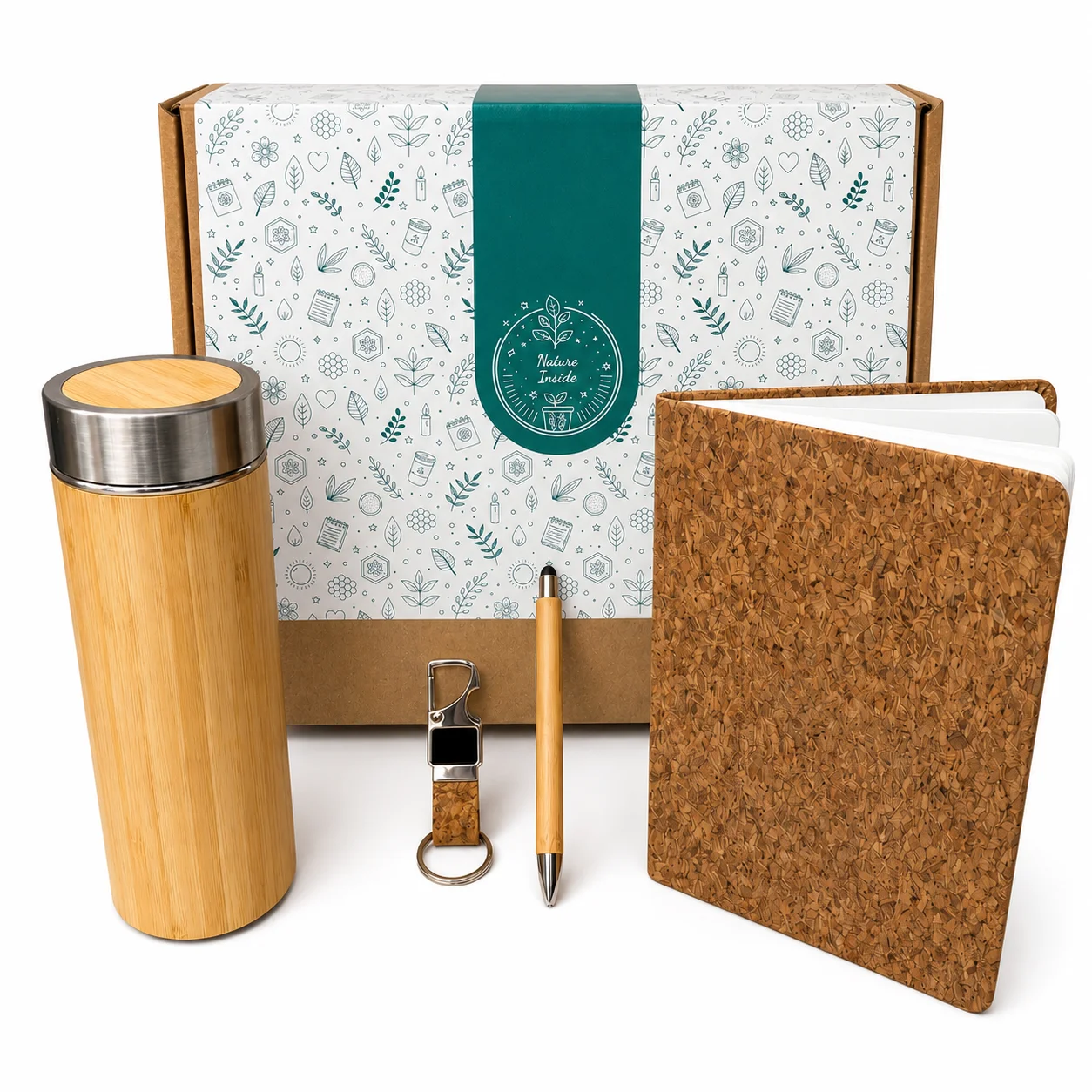
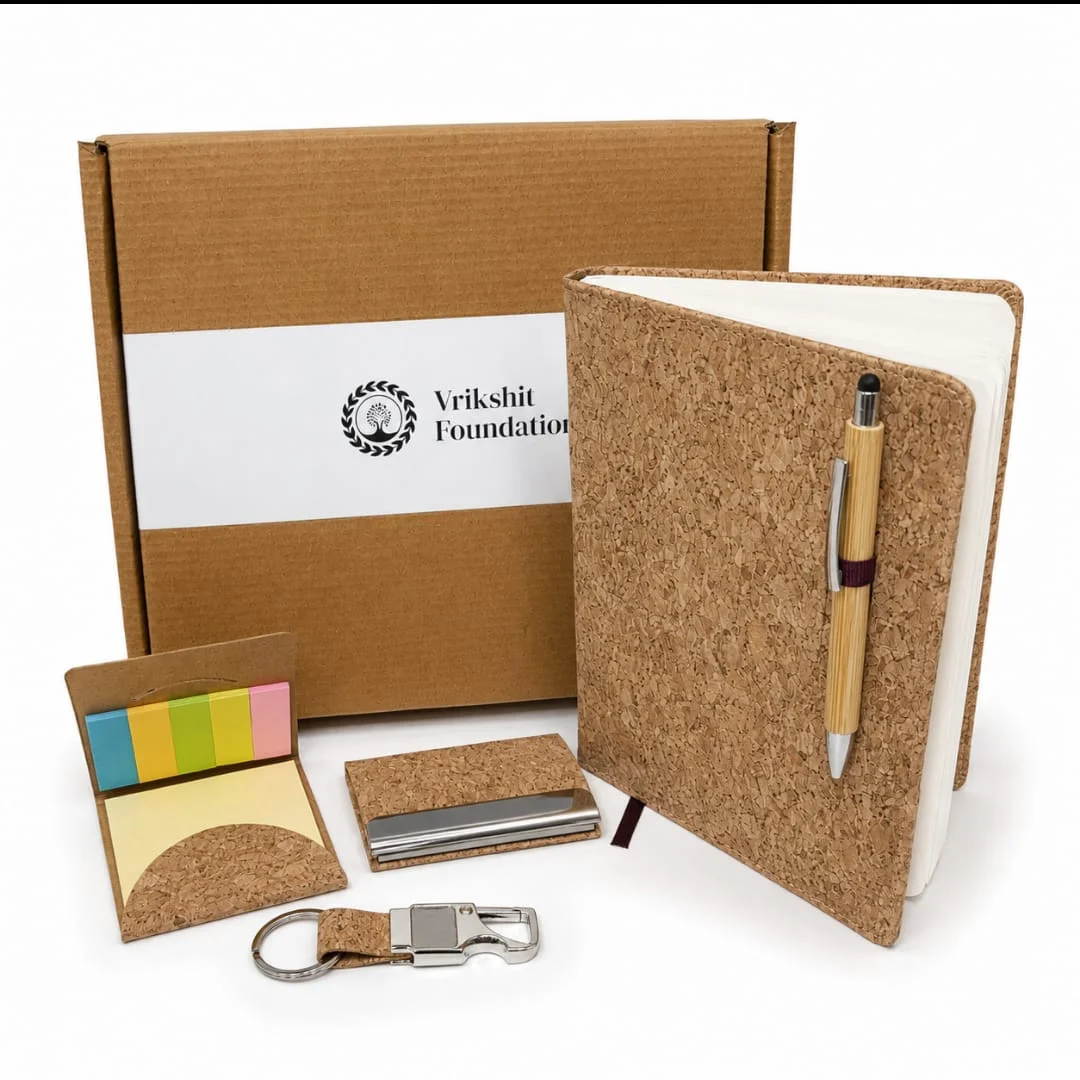
The notebook cover is made with cork. The inner paper, binding and other components should be considered separately.
Example: recycled paper
The outer sleeve uses recycled paper. Remove any non-paper components and follow the locally available recycling route.
Example: preserved botanicals
The frame contains real preserved botanicals. It is designed for indoor display and needs no watering. It is not a live or air-purifying plant.
From vague copy to clearer copy
| Vague or risky | Clearer, when verified |
|---|---|
| 100% sustainable corporate gift | The diary cover is made with cork and the sleeve uses recycled paper. |
| Eco-friendly plantable hamper | The set includes a seed-paper card and a separate grow activity. Other components should be used or separated as instructed. |
| Organic gift bag | The bag is made with certified organic cotton under the stated certification, if verified. |
| Biodegradable pen | The named component meets the stated biodegradation standard under the specified conditions, if supported. |
| Recyclable gift | The unlaminated paper sleeve can enter an appropriate paper-recycling stream where accepted. |
| Natural preserved forest | The piece contains real preserved botanicals arranged within an MDF and acrylic display. |
| Zero-waste packaging | Packaging was reduced to the protective box and instruction card. |
| Carbon-negative cork gift | The named component uses cork; no whole-product carbon claim is being made. |
How can a corporate buyer check an environmental claim?
Ask these seven questions:
- What exactly is being claimed?
- Does it refer to the entire product, packaging or one component?
- What evidence supports it?
- Is a percentage, comparison or certification being implied?
- What conditions or infrastructure are required?
- Is an important limitation being hidden?
- Would a recipient understand the claim without assuming something larger?
If the answer requires several unstated assumptions, rewrite the claim.
What is greenwashing?
Greenwashing is environmental communication that is false, unsubstantiated, exaggerated or misleading, including communication that hides important information and makes a product, service or company appear environmentally better than the evidence supports.
It can happen through words, images, badges, colours, omissions or the overall impression of an advertisement. A technically true component fact can still mislead if it is presented as a whole-product benefit.
The best defence is not more environmental vocabulary. It is a narrower claim with visible evidence and limits.
The simplest rule
Do not ask which environmental word sounds strongest.
Ask which material or product fact is true, useful to the buyer and supportable for the exact item.
Specific beats spectacular.
Need help reviewing a gifting claim?
Once the product, branding and packaging are final, bioQ can help prepare a concise material description and recipient instruction based on the approved specification.
References and further reading
- ASCI Guidelines for Advertisements Making Environmental/Green Claims
- APEDA National Programme for Organic Production
- European Commission: Biobased, biodegradable and compostable plastics
- USDA BioPreferred: Biobased products
- US EPA: Recycling basics and benefits
- US EPA: Composting at home
This guide is practical communication guidance, not legal advice or a substitute for product-specific testing, certification or regulatory review.
Build a claim-safe gifting shortlist
Share the audience, quantity, occasion, budget, delivery date and branding requirement. bioQ can suggest a claim-safe direction and explain the real material story behind it.
