

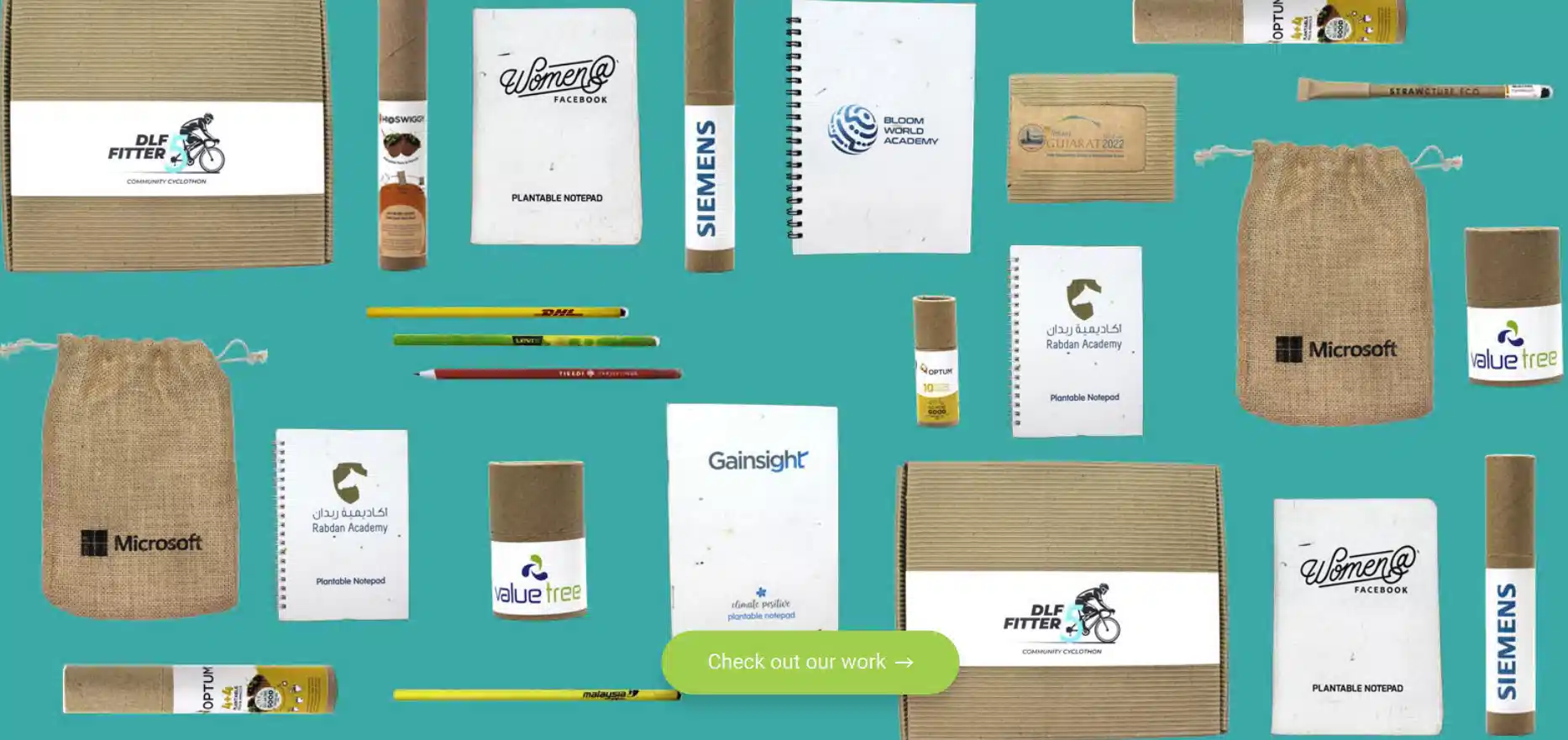
A good eco gift is not the one with the longest list of green words. It is the one whose purpose, material story and limits are clear.
How should a company choose an eco-friendly corporate gift?
Start with the recipient and the job the gift needs to do. Then compare usefulness, material evidence, branding, packaging and the realistic next step after use. No single material makes an entire gift sustainable, so assess the product component by component.
This guide uses “eco-friendly corporate gifts” because that is how many buyers describe the category. It should not be treated as a blanket claim about every product. The more useful question is: what makes this particular gift a better-considered choice for this particular brief?
1. Begin with the brief, not the catalogue
It is tempting to start by scrolling through products and asking for prices. That often produces a long, unfocused shortlist. Narrowing by audience first — the way corporate gifting is organised — costs less time than comparing everything.
A stronger process begins with six facts:
- Audience: Who will receive the gift?
- Occasion: Why are they receiving it?
- Desired response: What should they use, feel, learn or remember?
- Quantity: How many gifts are required, including spares?
- Budget: What is the practical per-gift or total budget?
- Timeline: When must approved, branded gifts reach their destinations?
These answers change the right material and format. A seed-paper handout may suit a participation-led event. A cork diary or desk organiser may suit everyday employee use. A preserved botanical piece may be more appropriate for executive recognition or a premium client moment.
The material should serve the brief. It should not be a green story added after the gift has already been selected.
A useful one-sentence brief
Try completing this sentence before requesting options:
We need [quantity] gifts for [audience] for [occasion], within [budget], delivered by [date]. We want recipients to [use, display, plant or participate], and the material story must be simple enough to explain in [gift card, email or campaign copy].
That sentence gives a supplier far more direction than “Please send your sustainable gift options”.
2. Decide what life the gift should have
The first environmental question is often about material. The first buyer question should be about use.
Useful gifts
These earn a place in daily routines. Examples include notebooks, desk organisers, calendars, drinkware and writing tools. Check whether the object is genuinely useful for the audience and whether its construction is suitable for repeated use.
Display gifts
These create recognition, memory or a sense of place. Preserved botanical frames, desk pieces and awards belong here. The key questions are where the item will sit, how it will be protected and whether the recipient can follow its simple care guidance.
Participatory gifts
These ask the recipient to do something. Seed paper and grow kits can create a planting, learning or family activity. Their value depends on clear instructions, viable seeds, suitable storage and realistic language about germination.
Consumable gifts
These are enjoyed and used up. The quality, sourcing, shelf life and packaging matter. Do not assume that an edible, natural or handmade item is automatically an environmentally better choice.
Many successful corporate gifts combine two roles, such as a useful desk item with a plantable message card. The combination should feel intentional, not like several unrelated “eco” items placed in one box.
3. Read the gift component by component
A corporate gift is rarely made from one material. It may include the main product, printing, adhesives, coatings, fasteners, inserts and packaging.
Use this component check:
| Component | Ask | Why it matters |
|---|---|---|
| Main product | What is it made from? | This is usually the central material story. |
| Cover, sleeve or surface | Is the claimed material structural or only decorative? | A thin cork layer does not make every component cork. |
| Printing and branding | Which ink, coating or process is used? | Branding can affect planting, recycling and appearance. |
| Fasteners and fittings | Are there metal, polymer, elastic or mixed parts? | Mixed construction changes whole-product claims. |
| Inner packaging | Is it needed for protection or presentation? | Unnecessary layers can weaken the story. |
| Outer packaging | Can it be reused, recycled or reduced? | Packaging is part of the recipient experience. |
| Instructions | Does the recipient know what to do next? | Planting, care and disposal claims need practical guidance. |
The aim is not to reject every mixed-material product. It is to understand it well enough to describe it accurately.
4. Ask what evidence supports the story
Good suppliers should be able to separate a material fact from a marketing phrase.
Ask questions such as:
- Which exact component contains the claimed material?
- Is the material description confirmed in the product specification?
- If recycled content is claimed, is a percentage available and documented?
- If a certification is shown, what product, facility or attribute does it cover?
- If the item is described as plantable, which component contains seeds?
- If it is called recyclable or compostable, under what conditions and in which collection system?
- Is the claim about the product, its packaging or only one part?
- Can the supplier provide wording suitable for the recipient card or campaign?
The Advertising Standards Council of India advises that broad terms such as “eco-friendly”, “sustainable” and “environment friendly” require robust substantiation when they imply a benefit for the complete product. A narrower, component-specific statement is usually easier for buyers and recipients to understand.
5. Treat branding as part of the product
Branding is not a final decorative step. It can change the material and end-of-use story.
Before approving artwork, ask:
- Does the branding method require lamination or an added polymer layer?
- Will a coating prevent paper from absorbing water or being recycled?
- Can the logo be smaller, engraved, printed directly or placed on a removable sleeve?
- Is a large printed area necessary for the campaign objective?
- Will an additional tag or band communicate the story more clearly than printing on every surface?
Good branding should help the recipient understand the gift. It should not cover the material, make the object less usable or force an unsupported claim into the design.
6. Question every layer of packaging
Premium does not have to mean more layers.
Packaging has three legitimate jobs:
- Protect the product.
- Present it appropriately.
- Carry essential information.
Anything beyond those jobs should earn its place.
Ask whether the gift needs a rigid box, an inner tray, plastic wrapping, tissue, filler, ribbon and a separate carry bag. Sometimes protective packaging is essential, especially for glass or preserved botanical products. The honest goal is appropriate packaging, not a blanket “packaging-free” promise.
When recycled paper is used, identify the exact sleeve, box, card or insert. Coatings, inks, adhesives and lamination may affect whether that piece can enter a paper-recycling stream.
7. Make the next step realistic
“What happens after use?” is more useful than “Is it biodegradable?”
The practical next step may be:
- Continue using it.
- Refill or repurpose it.
- Display it indoors.
- Plant the seed-bearing component.
- Separate paper, metal, glass or polymer parts.
- Use an available local recycling route.
- Dispose of a mixed component responsibly when no recovery route exists.
Do not promise a disposal outcome that depends on infrastructure the recipient is unlikely to have. A technically recyclable material is not the same as an item that will be collected and recycled in every city.
8. Compare quotations on more than price
Price matters, but the cheapest unit price may hide extra packaging, unclear specifications, unsuitable branding or a weak recipient experience.
Compare shortlisted gifts across these factors:
| Factor | What good looks like |
|---|---|
| Audience fit | The object suits the recipient and occasion. |
| Useful life | It has a clear use, display or participation role. |
| Material clarity | The relevant components are identified. |
| Evidence | Important claims can be supported. |
| Branding | The method suits the material and design. |
| Packaging | Protection and presentation are proportionate. |
| Instructions | The recipient knows how to use, care for, plant or separate it. |
| Delivery | Quantity, approval and fulfilment timings are realistic. |
| Communication | Your team can explain the gift without exaggeration. |
9. Watch for these red flags
Pause when a proposal relies on:
- “100% sustainable” without a full-product assessment.
- “Zero impact” without a defined scope and evidence.
- “Plastic-free” when the product contains acrylic, resin, polymer fittings, coatings or mixed packaging.
- “Fully biodegradable” without a test standard, conditions and timeframe.
- “Guaranteed growth” for a seed-bearing product.
- A certification logo with no explanation of what it covers.
- A recycled-content percentage that cannot be documented.
- A product image and name that suggest the entire item is made from one feature material when it is not.
- An environmental saving or carbon number with no calculation method.
Clear limits are a sign of product understanding, not a weakness.
10. Use this ten-question buyer checklist
Before approving an eco corporate gift, confirm:
- Who is the recipient?
- What should the gift help them do, feel or remember?
- Is the gift useful, displayable or genuinely participatory?
- Which exact components carry the material story?
- What evidence supports those component claims?
- Does the branding method change planting, recycling or reuse?
- Is every packaging layer necessary?
- What can the recipient realistically do after use?
- Can our company repeat the claim in plain language?
- Are quantity, budget, approval and delivery timings workable?
If several answers are still vague, the product is not ready for campaign copy.
A worked example: employee onboarding
Imagine a company needs 500 onboarding gifts for employees joining across several Indian cities. The gift should feel useful, carry a nature-led message and fit on a desk. That is the brief behind most employee welcome kits.
A weak brief might say:
Send us your best eco-friendly hampers. Everything must be sustainable and biodegradable.
A stronger brief would say:
We need 500 desk-focused onboarding gifts for employees across several Indian cities. The gift should include one useful item and one simple nature-led interaction or display element. Please identify the material of each main component, recommend branding that does not require unnecessary lamination, keep packaging proportionate and provide claim-safe wording for the welcome card.
That brief could lead to several valid directions:
- A cork diary or desk organiser for repeated use.
- A plantable calendar or seed-paper card with clear planting instructions.
- A compact enclosed preserved botanical piece for long-term indoor display.
- A grow kit when recipient participation is central to the onboarding message.
The best option depends on the final budget, audience and logistics. The brief makes those trade-offs visible before the company approves a product.
The simplest rule
Choose the gift you can explain without a paragraph of disclaimers.
Name the useful object. Name the relevant material or component. Explain the intended use or next step. Keep the limits visible.
That is a stronger impact story than a large promise no one can verify.
Need a considered shortlist?
Share your audience, occasion, quantity, budget, delivery date and branding requirement with bioQ. We will suggest suitable directions and explain the material story and communication limits of each option.
References and further reading
Request a considered gifting shortlist
Share the audience, quantity, occasion, budget, delivery date and branding requirement. bioQ can suggest a claim-safe direction and explain the real material story behind it.
