

It becomes something else
Seed paper. The dated sheet is planted after its month and may grow. The waste becomes the point of the gift.
Corporate calendars · 2027 edition
Compare plantable seed paper, water hyacinth, cork and wood first. Then ask the harder question: how much of this dated object still has a use after 1 January?
The question the category avoids
You print a dated object, give it away, and twelve months later it has no function. That is not a manufacturing flaw — it is the product category. Which makes “eco-friendly calendar” a slightly awkward phrase, because the most sustainable calendar is arguably the one nobody printed.
We sell calendars. We would still rather start here than pretend otherwise, because once you accept the premise, the comparison becomes genuinely useful: not which calendar is green, but how much of this object survives 1 January, and what was it made of before it was a calendar?
There are four honest answers. Every eco calendar you will be shown this season is one of them.
Seed paper. The dated sheet is planted after its month and may grow. The waste becomes the point of the gift.
Cork or wood block calendars. Year-agnostic by design — no printed year, so nothing expires and nothing is replaced.
Water hyacinth. The invasive plant is harvested and transformed into a distinctive handmade paper.
Recycled paper. Honest and cheap, but the weakest claim — it diverts waste rather than doing anything with it.
The most useful question is not “is it eco-friendly?” It is “which parts of this are dated, and what happens to them in January?”
Four materials, four different claims
And, more usefully, what it cannot. Every material below is one bioQ actually manufactures — these are not concepts.
It adds
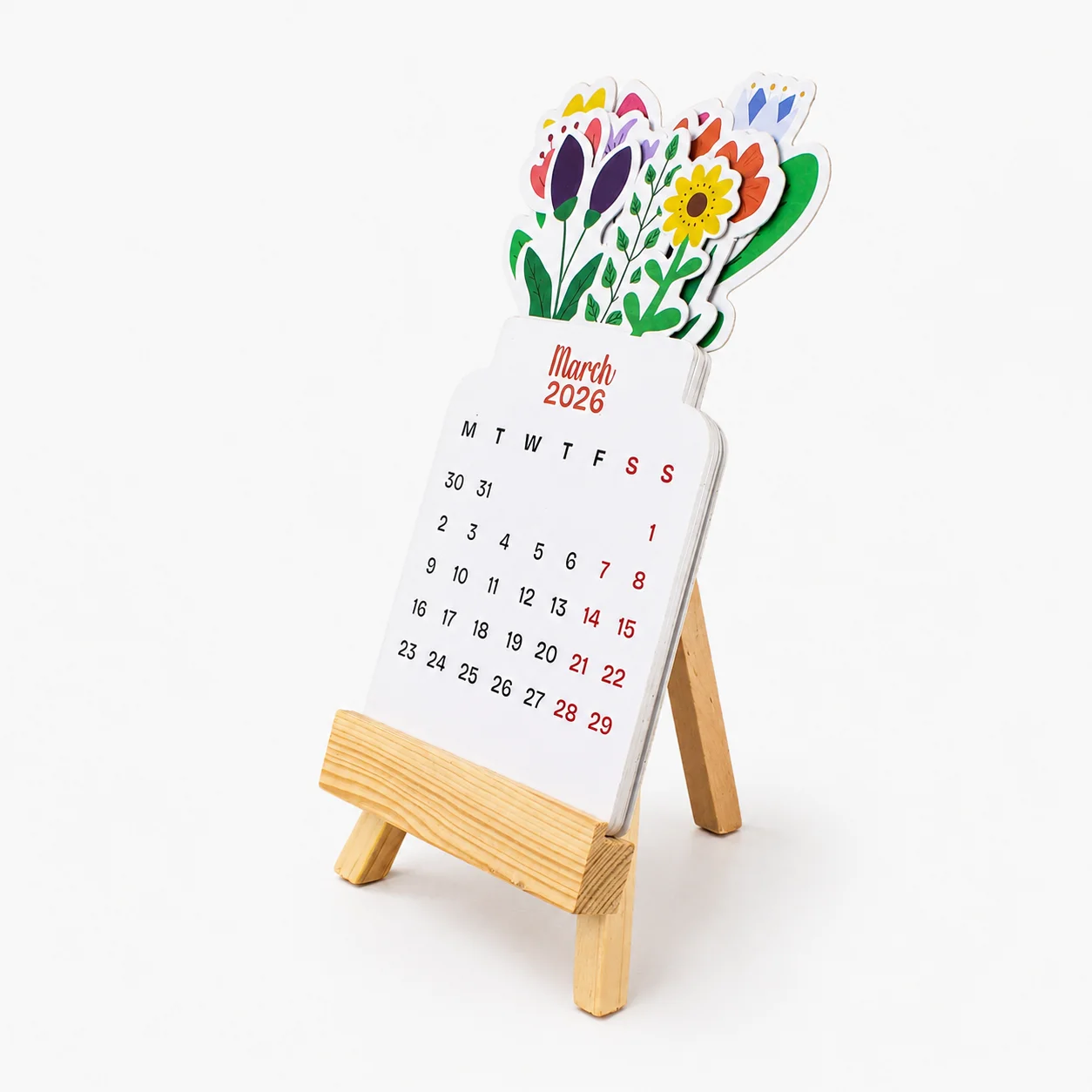
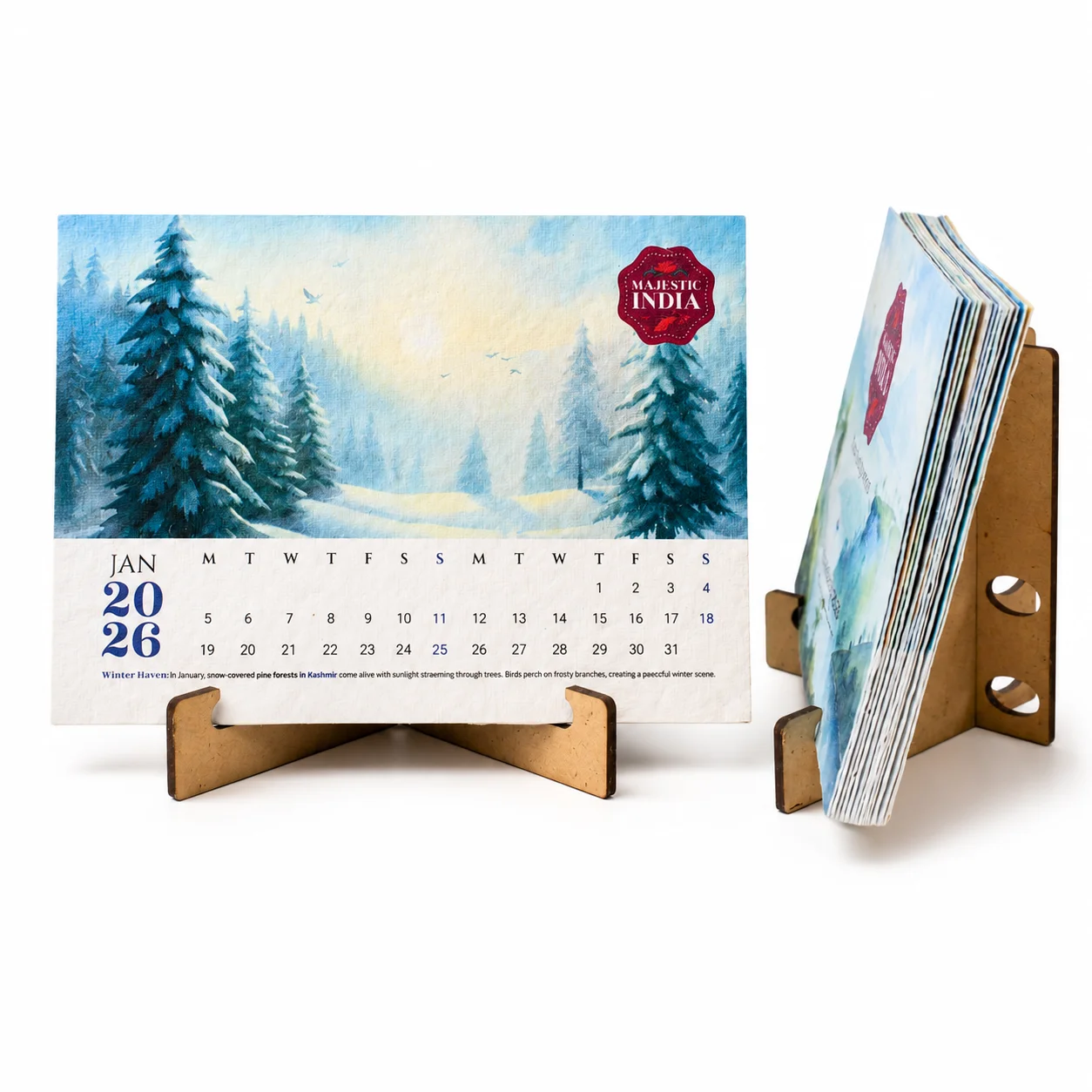
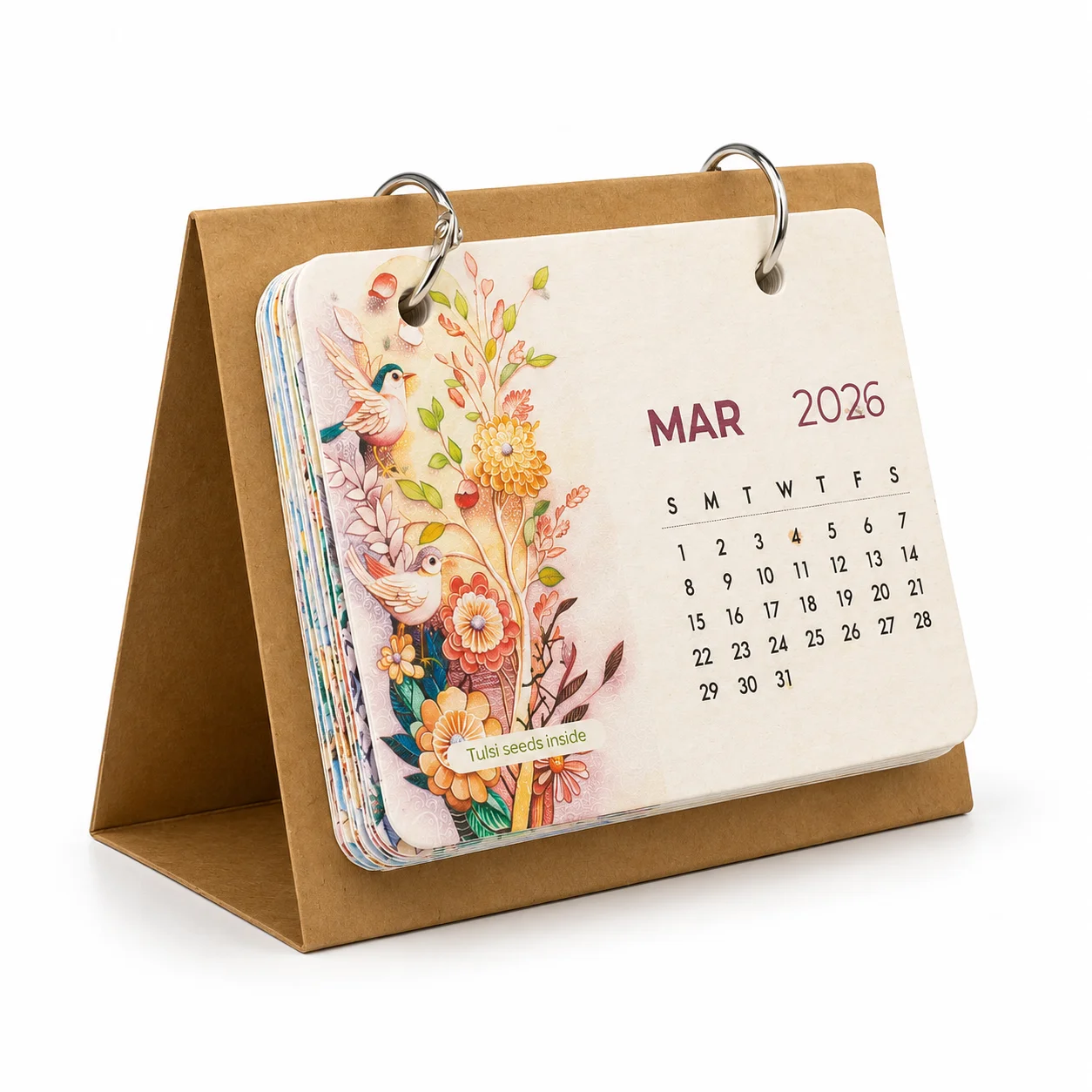
Month sheets with marigold, tulsi or tomato seed embedded during papermaking. Each finished month is planted rather than binned.
It removes
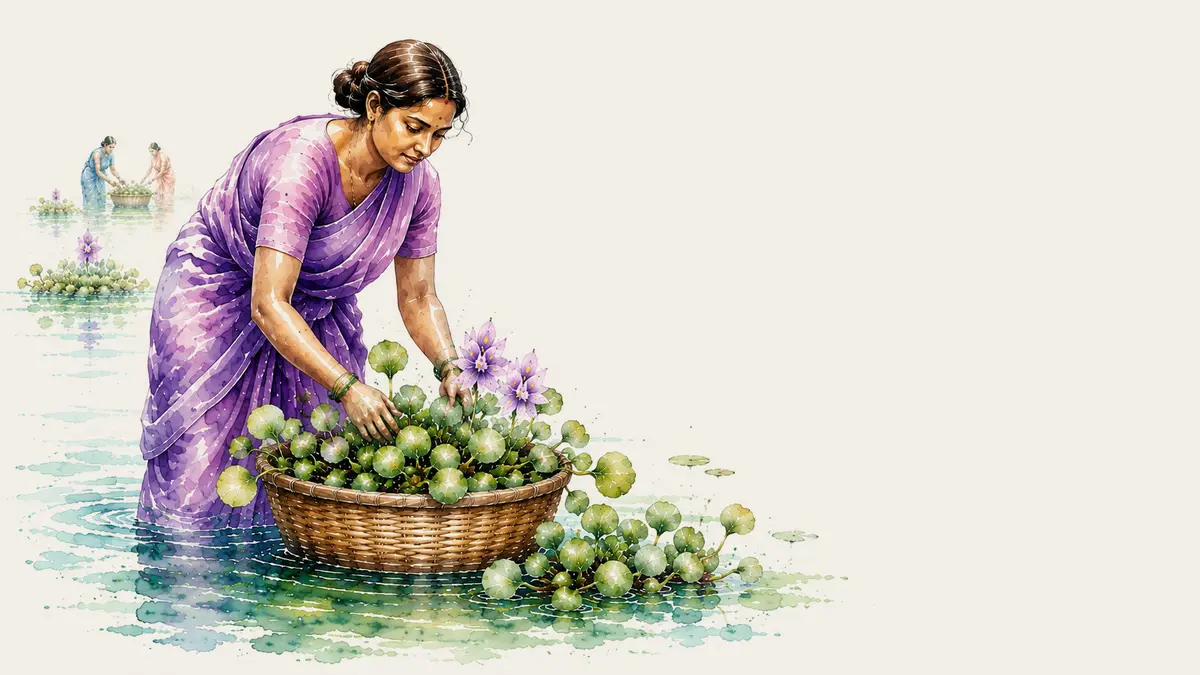
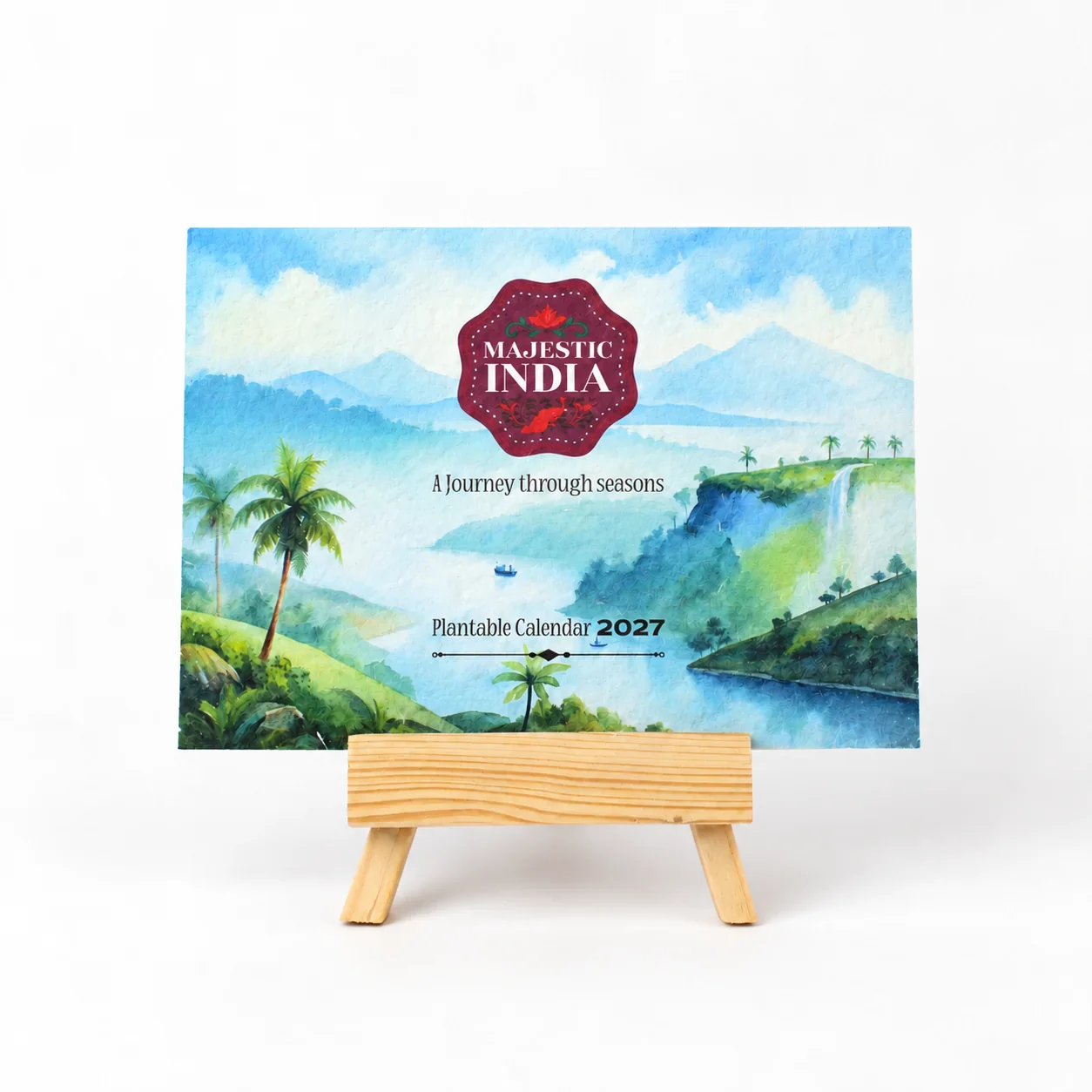
Jalkumbhi. Handmade paper made with 70% water-hyacinth fibre and 30% recycled-paper fibre.
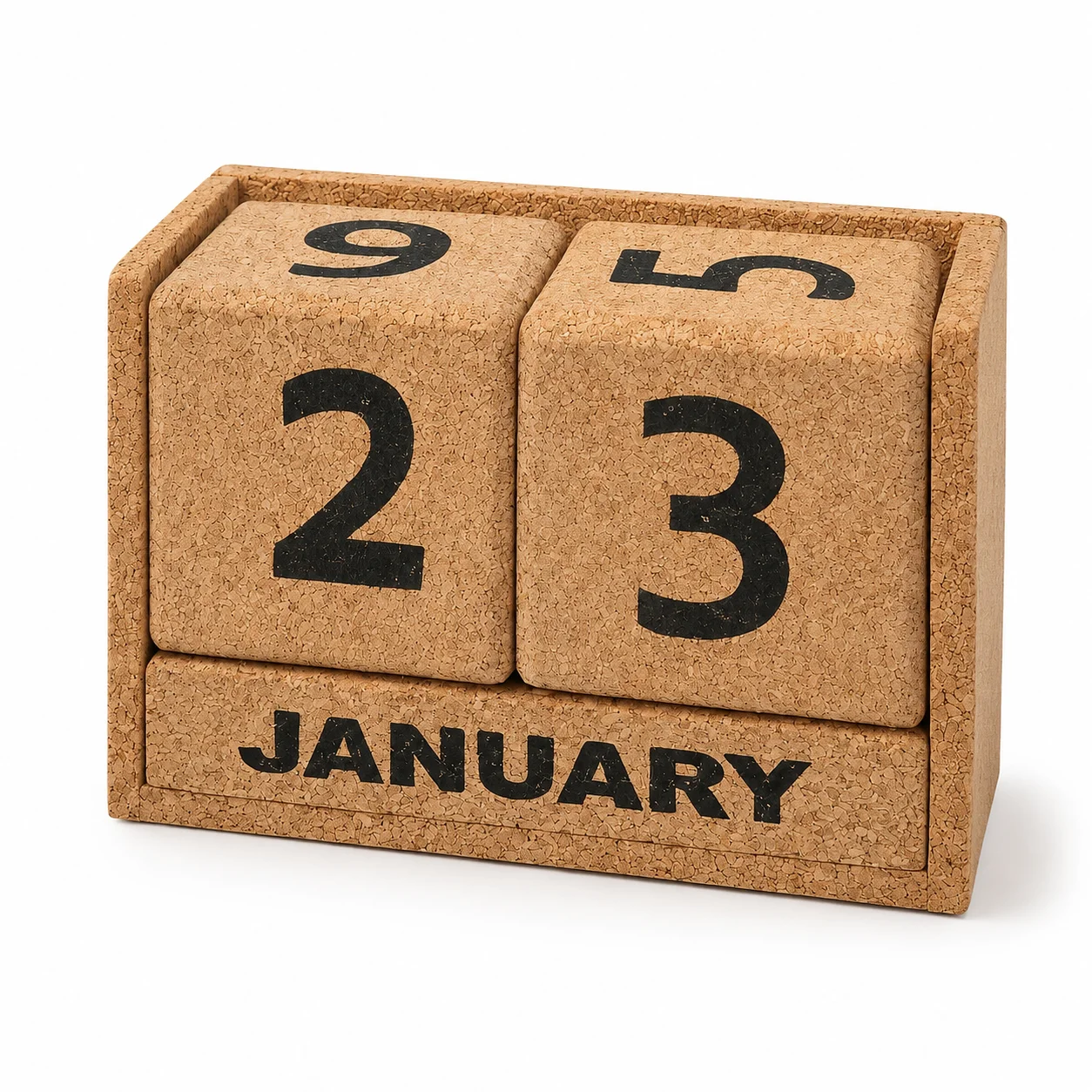
It never expires
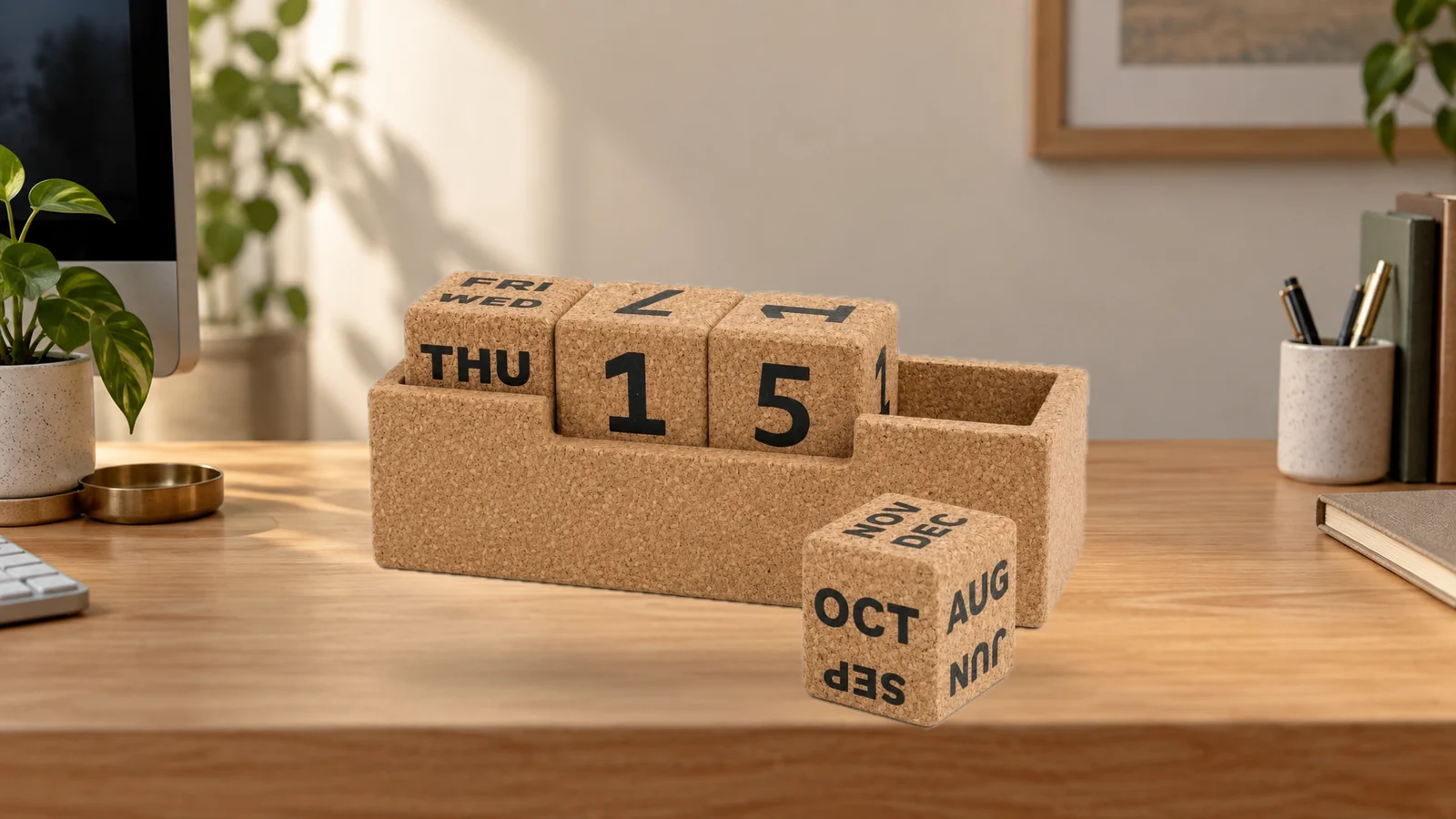
Date cubes and month blocks on a cork base. No printed year anywhere, so the object simply carries on working in 2028 and beyond.
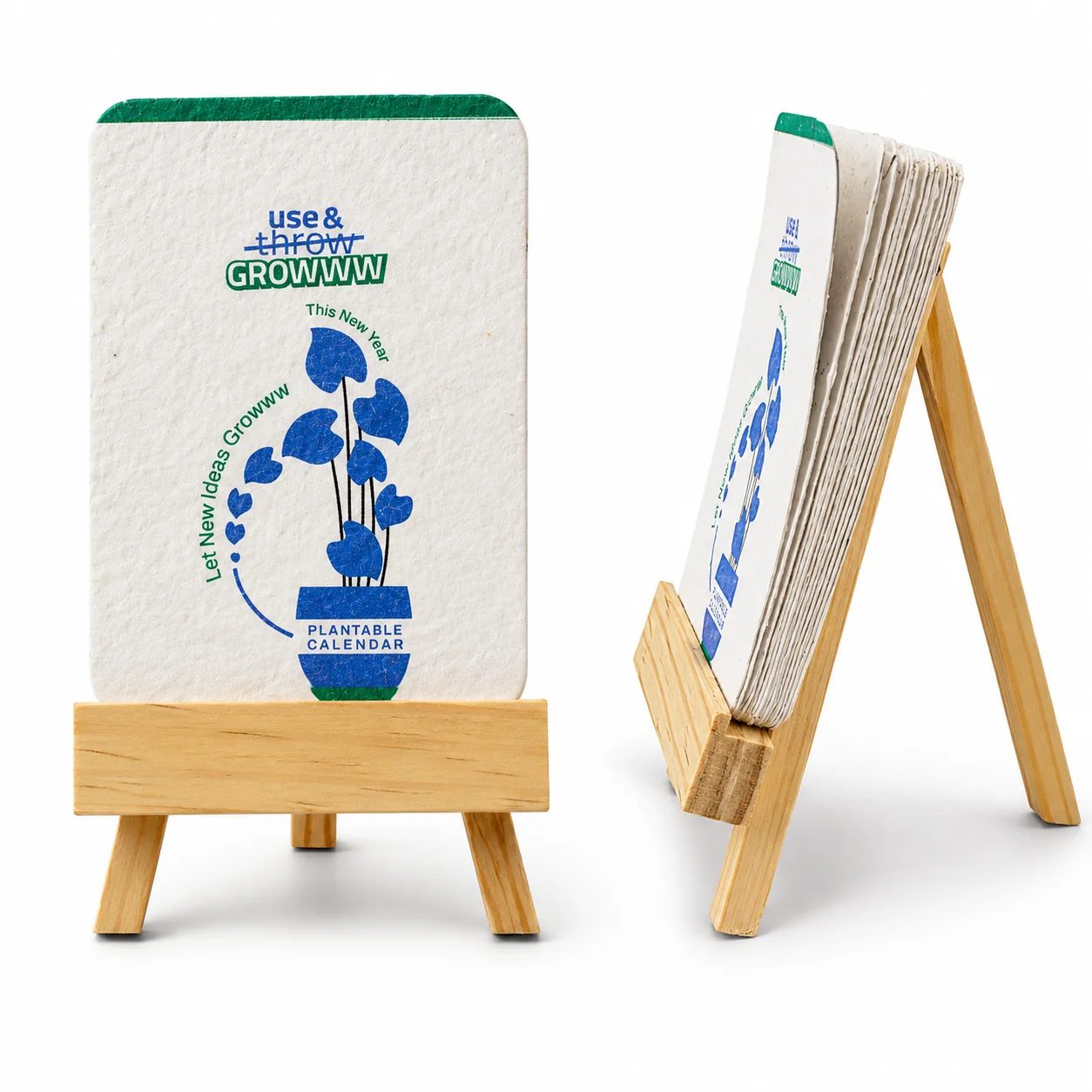
It part-survives
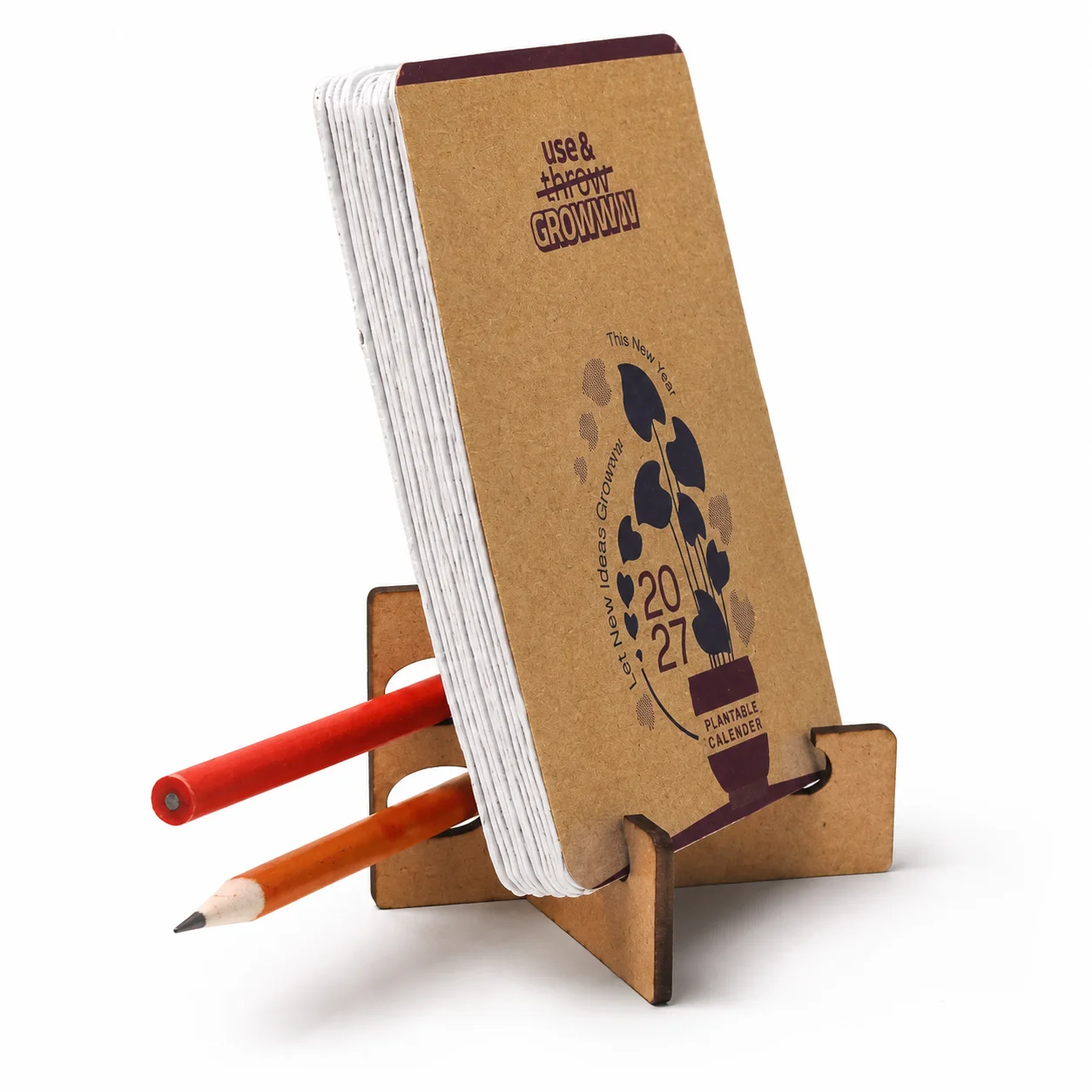
The stand is undated and reusable; only the sheets carry the year. The best of the conventional formats, and the cheapest to reorder.
| Material | The claim | What it cannot claim | Survives January | Verdict |
|---|---|---|---|---|
| Seed paperPlantable calendar | The dated sheet becomes a plant instead of waste. | Guaranteed germination. Any claim about what actually grew. | Stand only | Best story for employees |
| Water hyacinthJalkumbhi | 70% water-hyacinth fibre and 30% recycled-paper fibre. | Plantable. Certified. Carbon neutral. Functional performance beyond its distinctive surface. | Stand, cover and packaging | Distinct invasive-plant story |
| CorkBlock calendar | Year-agnostic. Nothing is dated, so nothing is replaced. | Anything about the material removing or adding. | All of it | Least wasteful by design |
| Wood / MDFStand plus sheets | The stand is reusable; only twelve sheets are dated. | Anything about the paper itself unless it is specified. | Stand only | Best value at volume |
| Recycled paperConventional eco option | The fibre was waste before it was a calendar. | Any impact beyond diversion. Usually no stated ratio. | Depends on the stand | Weakest claim |
The disposability ladder
This is the ranking the category does not publish, because for most suppliers the answer is “almost none of it”.
Cork block calendar. No printed year on any component. The whole object works indefinitely, which also means you are not selling it again next year — a genuine commercial trade-off, honestly stated. See the Cork Block Calendar →
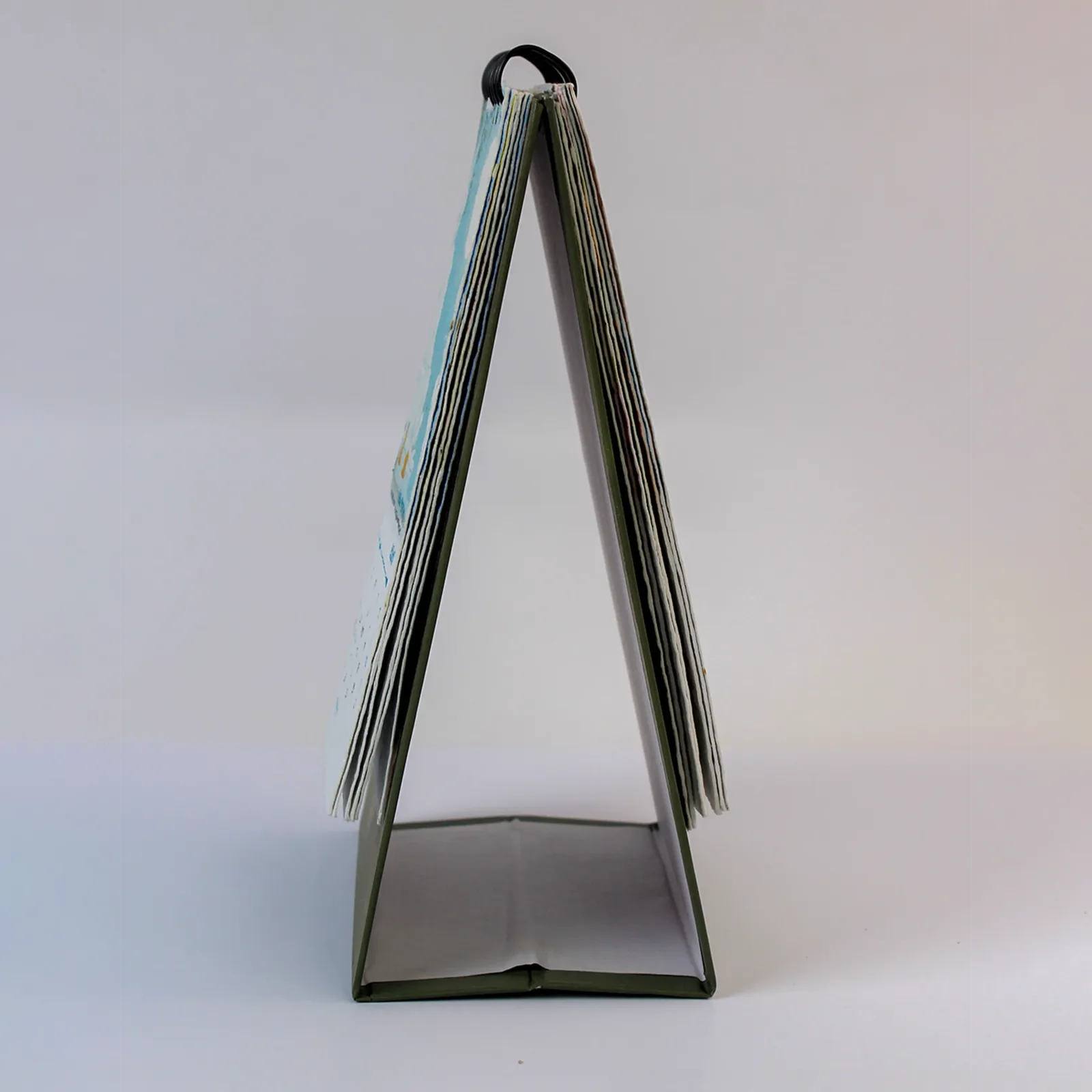
Jalkumbhi water hyacinth. The base board, cover and packaging are deliberately year-agnostic — only the twelve month leaves are dated. Its handmade sheets give harvested invasive plant material another use.
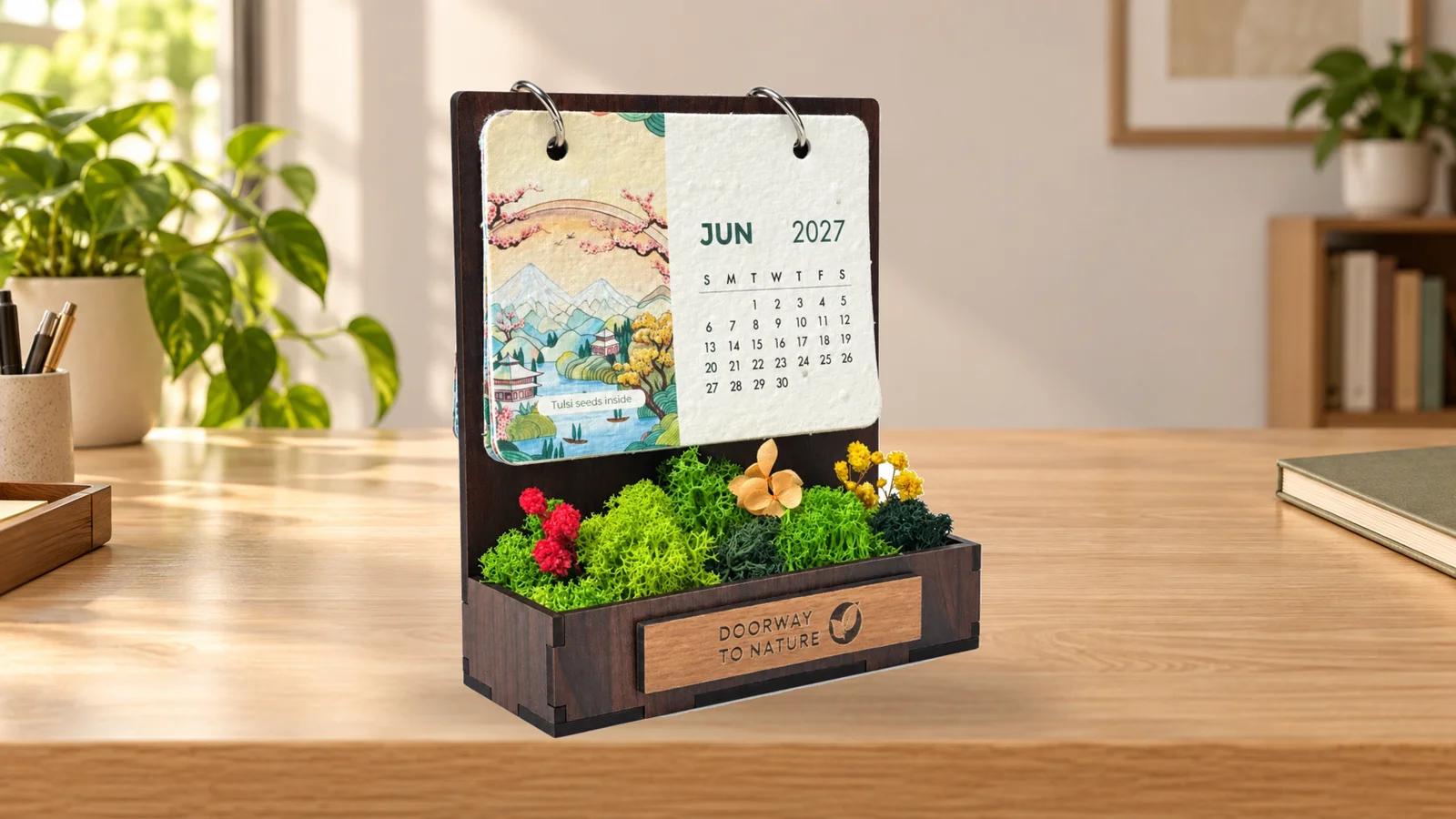
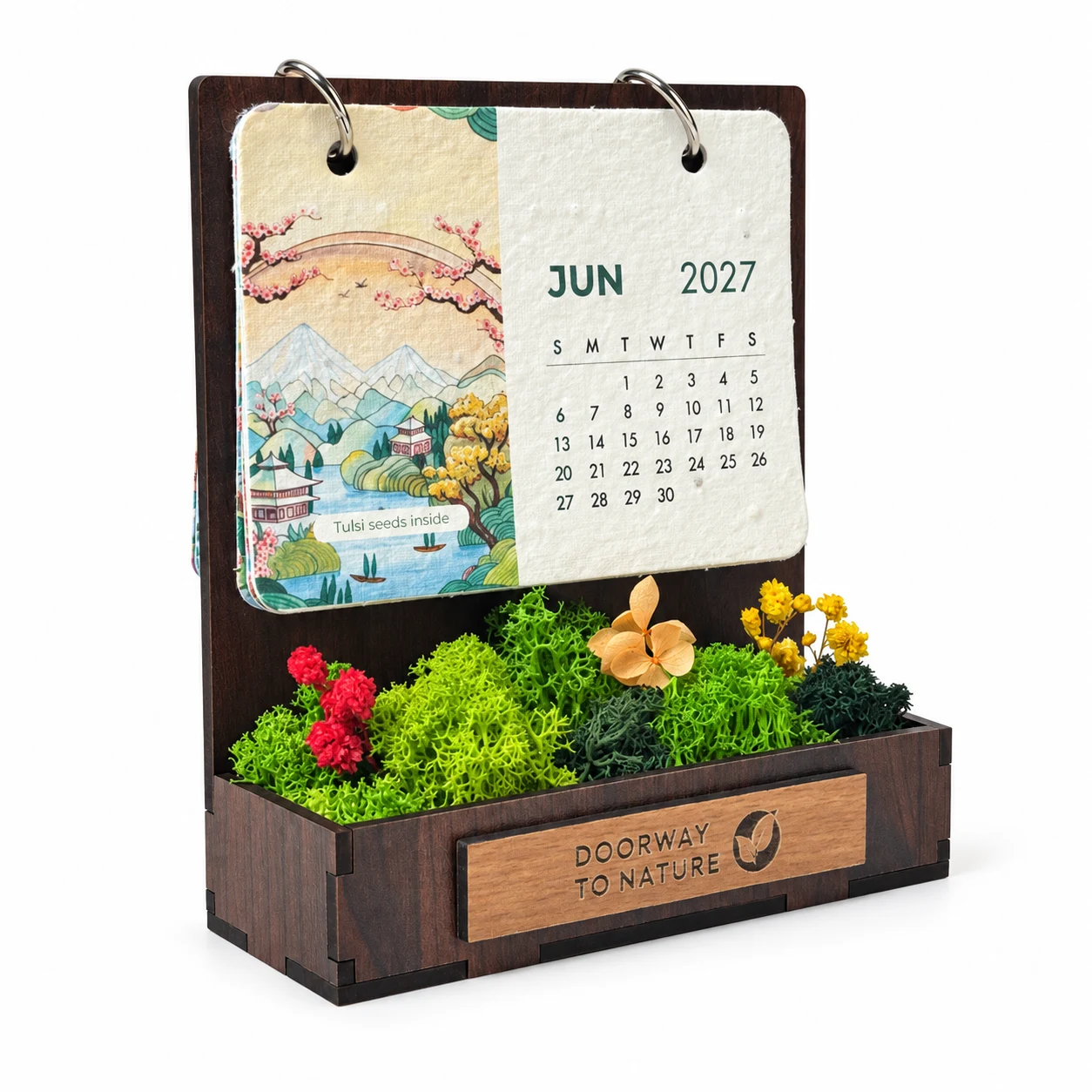
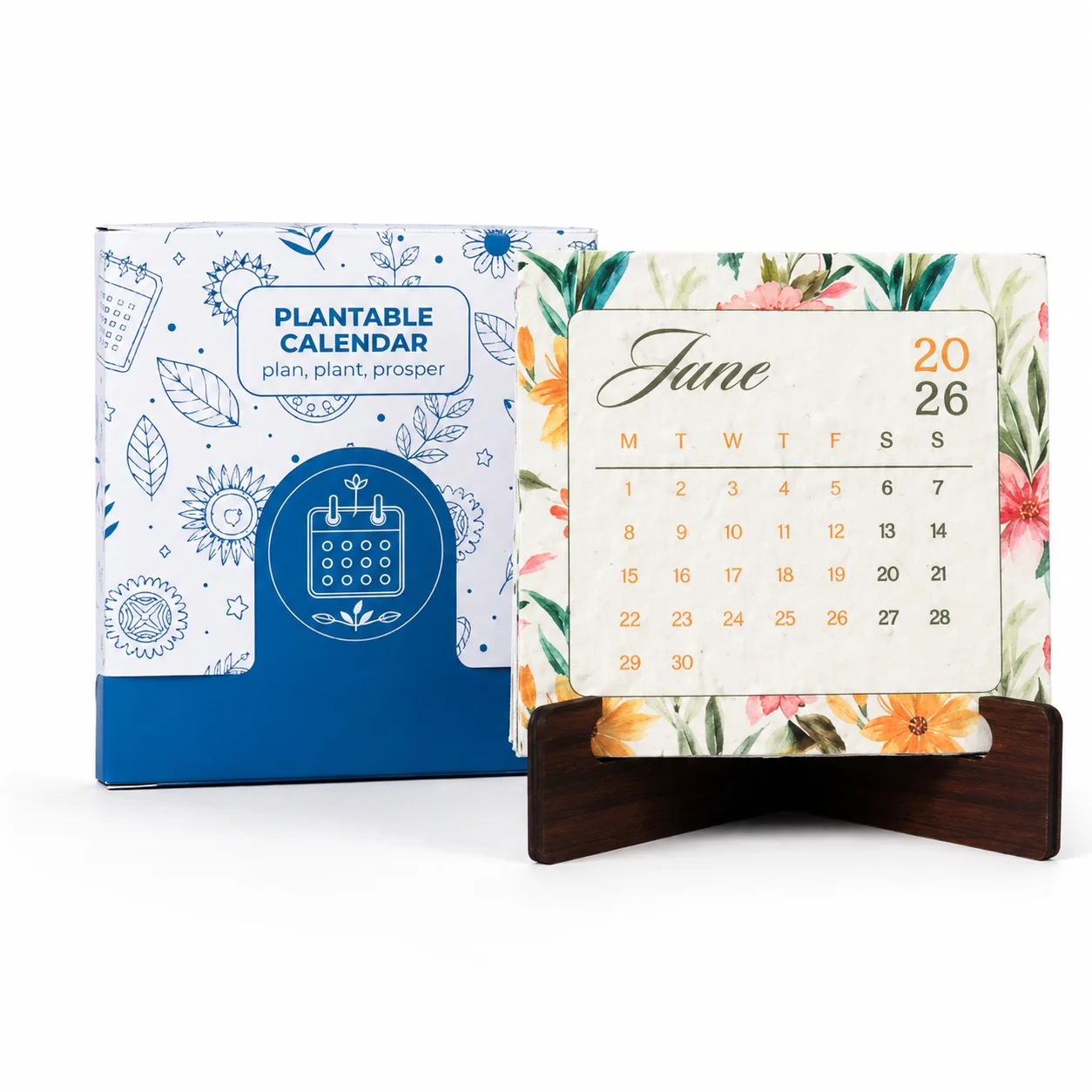
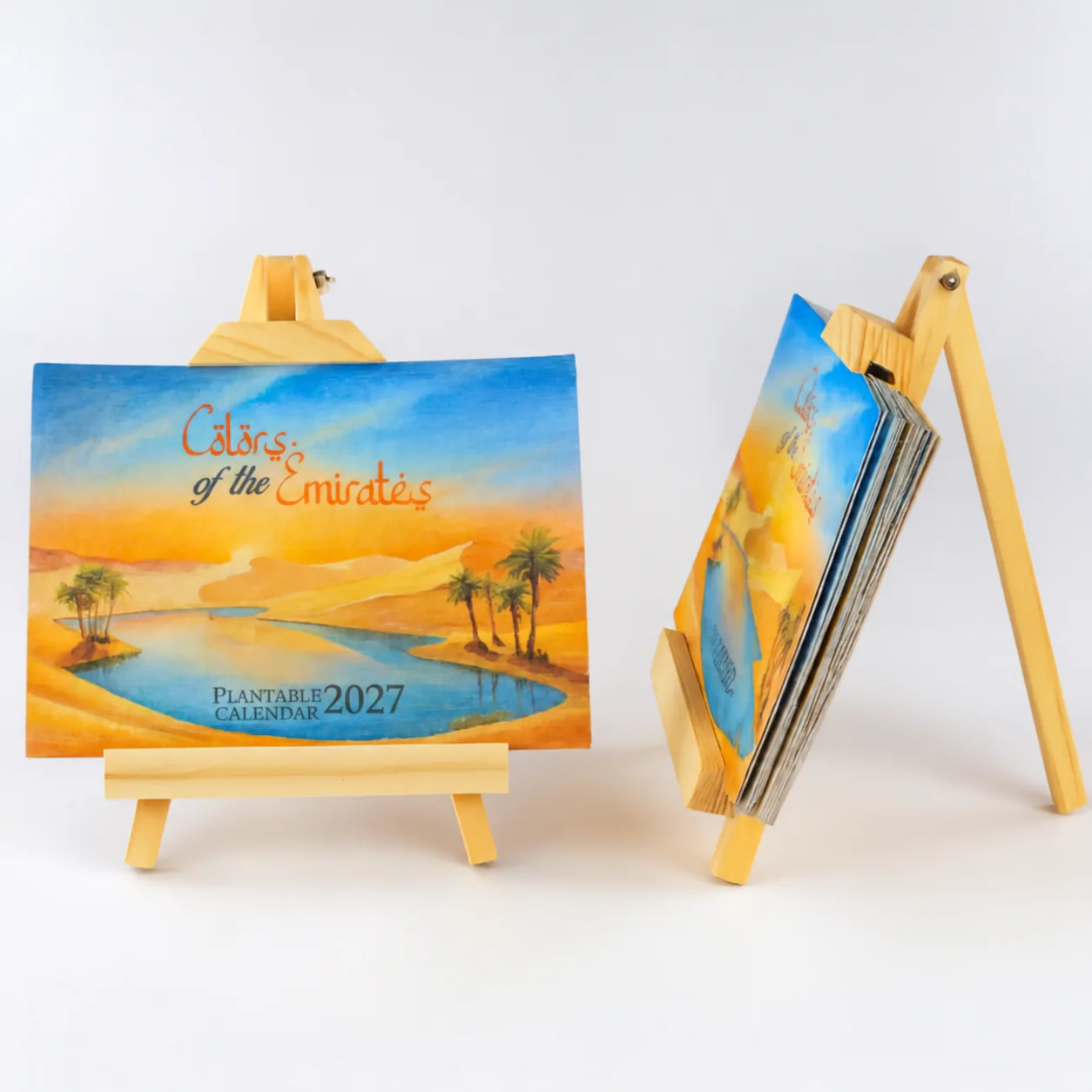
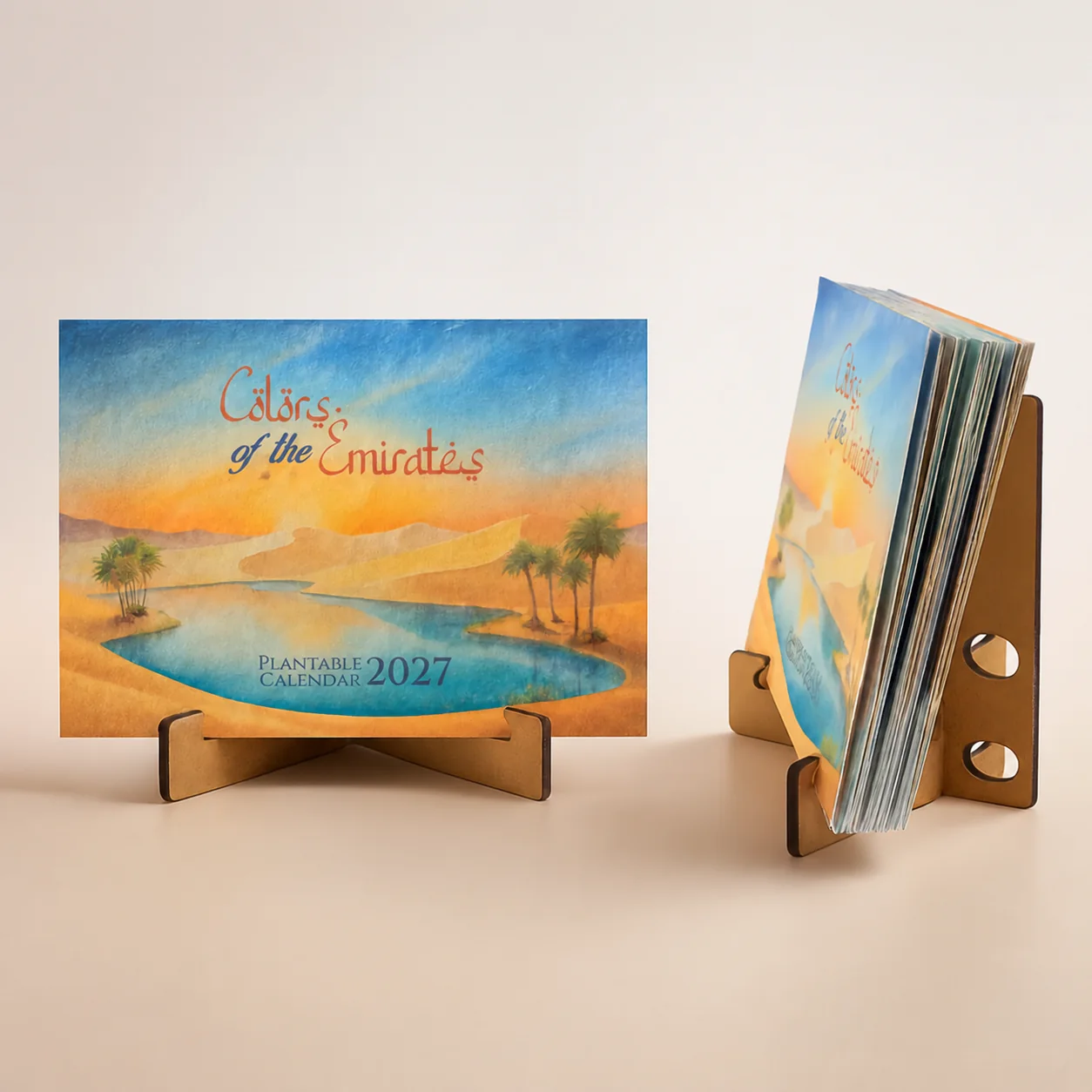
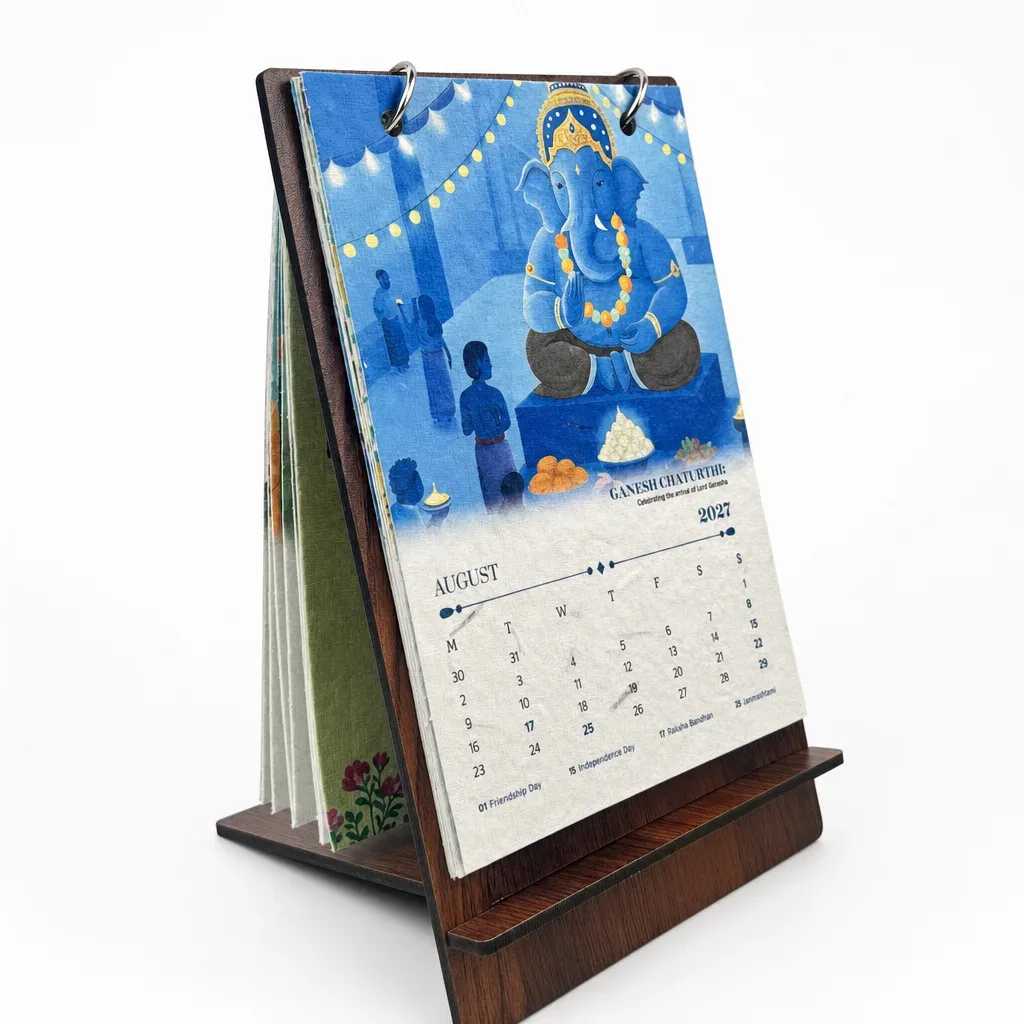
Plantable seed paper on a wooden or MDF stand. The stand is reused, and the dated sheets can be planted. Some formats add another desk function: compare the covered Terra and open Forest calendar organisers, or see the Forest Garden Desk Calendar with its moss display. For a simpler stand, compare the B7 and B6 plantable desk calendars.
Conventional printed calendar on a reusable stand. Fine, but it is doing nothing that a plain recycled sheet would not do.
The wall calendar and any desk calendar where the year is printed on the stand itself. Entire object is waste on 1 January. Avoid, whatever it is made of.
Sizes
Size drives cost and desk presence. Final Jalkumbhi calendar details will follow the physical sample.
Compact desk footprint, the volume workhorse. Best for large employee populations and event giveaways.
Examples: B7 Plantable Desk Calendar, Forest Garden and Terra Desk Organiser.
The standard corporate desk calendar. Enough surface for real artwork without dominating a desk.
Example: B6 Plantable Desk Calendar.
Leadership and key-account gifting. Reads as a considered object rather than a giveaway.
The range
Indicative per-piece bands, excluding 18% GST and freight. Final pricing depends on quantity, branding and artwork. Ordering a larger quantity? Tell us how many you need for a volume quote.
From plantable month cards to an undated cork calendar
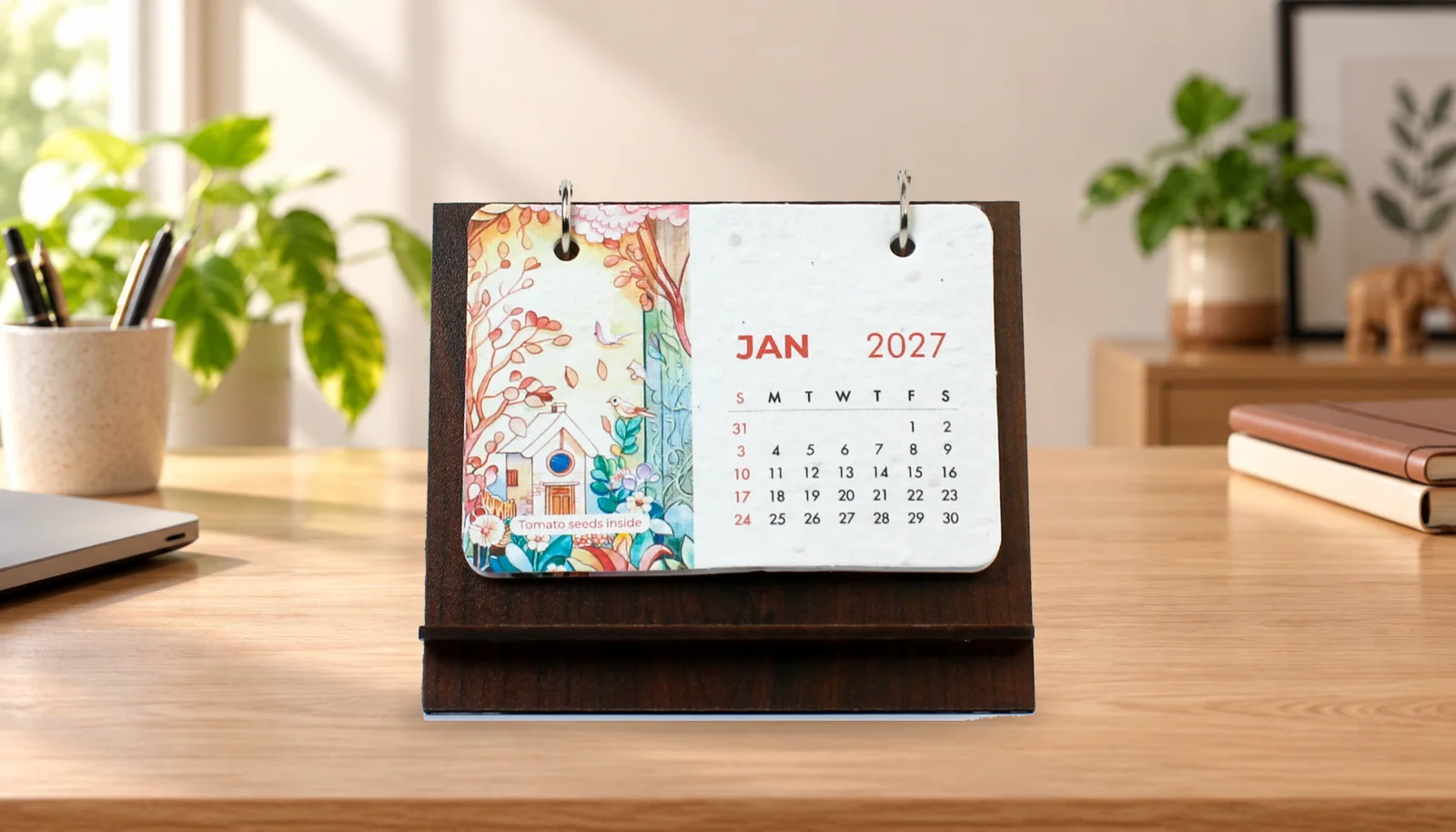
from ₹198 + 18% GST →
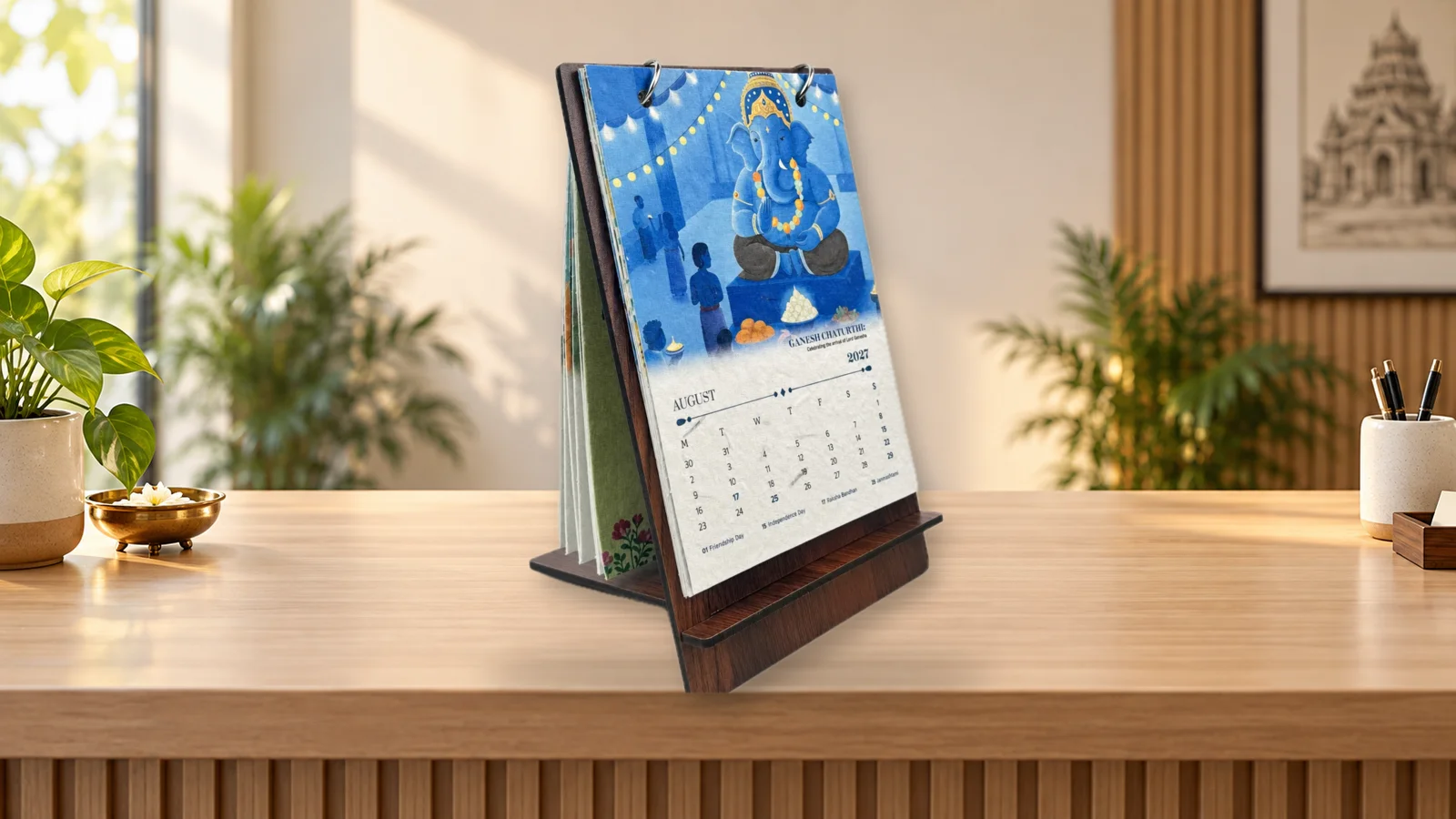
from ₹396 + 18% GST →
See the special page →
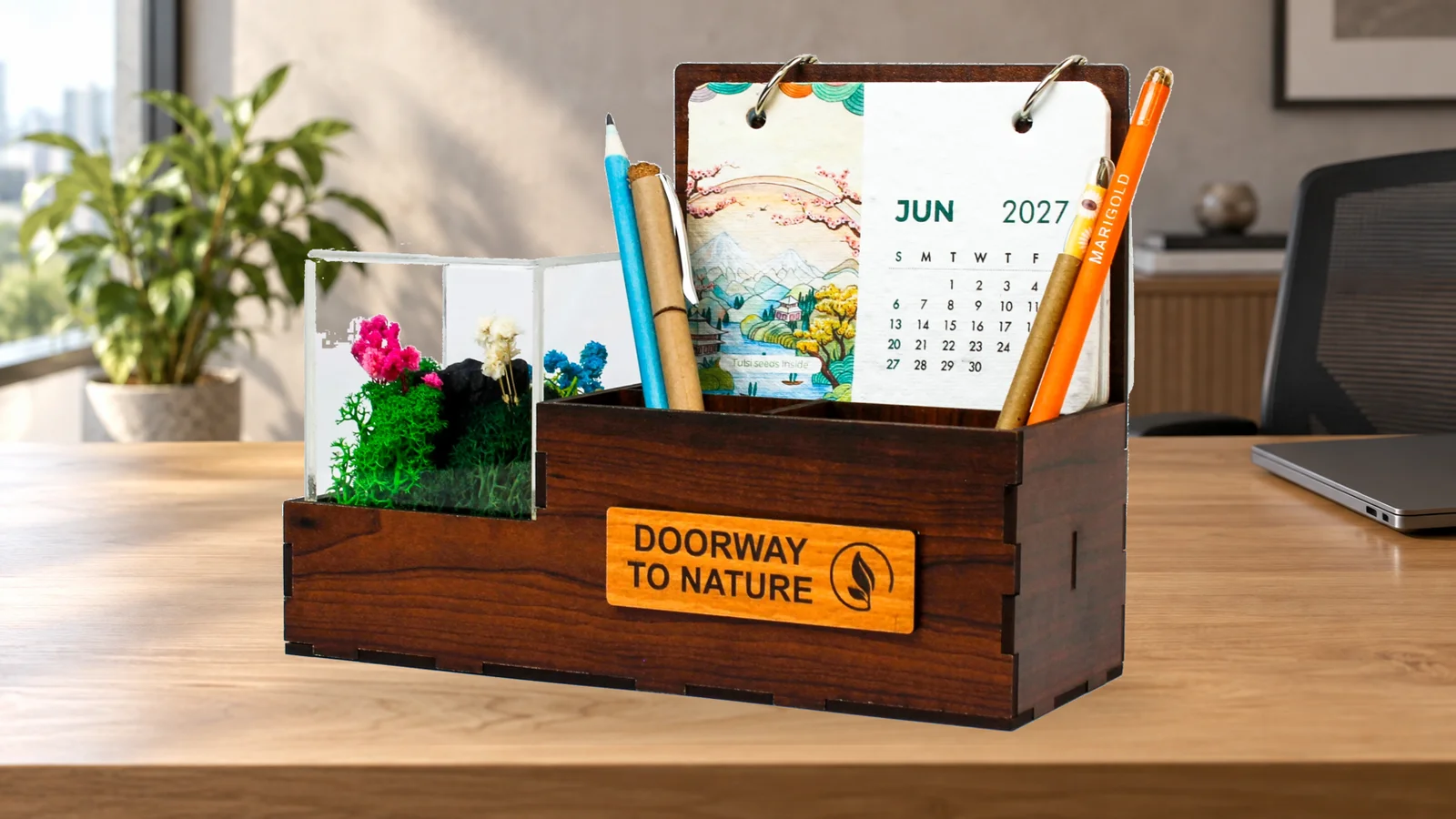
₹765 + 18% GST →
₹378 + 18% GST →
Physical sample follows the final design
Marigold, tulsi or tomato seed
₹316–340
₹100–250
₹100–250
₹100–250
₹100–250
₹250–500
₹250–500
₹250–500
₹250–500
₹250–500
Nothing dated, or paper on a reusable stand
Before the artwork
Start with the recipient and what remains after the printed year. Then decide what the material can honestly say.
A crowded employee desk, a client table or a leadership office asks for a different footprint.
The whole cork calendar, a stand, a pen holder or a moss garden can remain when dated cards cannot.
Seed paper may grow after use; Jalkumbhi gives harvested water hyacinth another use; cork has no printed year.
Check the actual stand, paper texture and printed proof before settling the message.
Buyer questions
Including the ones where the honest answer is not the flattering one.
There is no single answer, because calendars fail on two axes: what they are made of, and how much of the object dies on 1 January.
Least wasteful by design: a cork block calendar — year-agnostic, nothing printed, nothing replaced. Best transformation: plantable seed paper, where the dated sheet can be planted after use. Strongest material story: Jalkumbhi, where harvested water hyacinth becomes handmade paper. Worst option, whatever the material: any calendar where the year is printed on the stand, so the entire object is waste in January.
A plantable calendar has month sheets made of seed paper — handmade paper with seeds embedded during papermaking. Once a month has passed, that sheet is separated, placed in moist soil and watered, and may germinate under suitable conditions. bioQ makes plantable calendars in B7 and B6 on wooden easels, MDF flat-pack stands, kraft card stands and WireO binding, with marigold, tulsi or tomato seed.
They tell different stories and neither is universally better. Seed paper can be planted after use under suitable conditions. Jalkumbhi uses a 70:30 blend of water-hyacinth fibre and recycled-paper fibre, giving harvested invasive plant material another use.
Choose seed paper if you want recipient participation. Choose water hyacinth when the invasive-plant and handmade-paper story suits the brief. See the Jalkumbhi material story.
Four things, in this order. One: how much of the object is actually dated — if the stand, cover and packaging are year-agnostic, only the sheets need reprinting. Two: whether the sustainability claim is quantified or just an adjective. Three: whether the non-paper parts — stands, rings, clips, adhesives — are separable and honestly described. Four: whether the supplier states the material's limits, not only its benefits. A supplier who will not tell you what their material cannot do has usually not thought about it.
bioQ's compact B7 formats sit around ₹100–₹250 per piece, and B6, B5 and premium stand formats around ₹250–₹500. The Terra Calendar Desk Organiser is ₹765. These are indicative prices before 18% GST; the final figure depends on the chosen format and artwork.
Tell us the audience, preferred size and material, artwork or branding requirements, and the number of recipients. If artwork exists, share it for a stock proof; if it does not, we can start with the format.
Yes. Logo placement usually sits on the base panel or stand, with month sheets kept clean so the calendar survives on a desk past January — a crowded branded sheet is the fastest route to a drawer. Printing behaviour varies by material: seed paper and water hyacinth stock are absorbent and textured, so colours print duller and darker than on screen and fine detail fills in. Artwork is proofed on real stock before a run is committed.
No, and nobody can honestly promise otherwise. Germination depends on seed condition, storage, soil, water, temperature, light, climate and recipient care. bioQ supplies planting instructions with the product and states the conditions plainly. More on how seed paper behaves.
Yes. The Terra Calendar Desk Organiser (FTG60) combines a ring-bound B7 seed-paper calendar for 2027, a pen holder and a small preserved forest under clear acrylic. After the year, the organiser and forest stay and the cards can be planted. From ₹765 + 18% GST.
The cork block calendar has no printed year. The Terra organiser keeps a pen stand and preserved forest, while the Forest Garden keeps a moss display. B7 and B6 plantable calendars keep their stands while the dated cards can be planted.
2027 enquiries are open
We will come back with a shortlist across materials, indicative costing and physical examples you can put on a desk and argue about.
Updated · 2027 edition